
Understand the assembly before opening it
In an Old Towne Orange home, water behind plaster or beneath wood flooring may not show its full path at the surface. A wet patch can come from a nearby pipe, an upper room, or an exterior opening; observation alone cannot settle the cause. Record when it appeared and whether plumbing use changes it.
Different finishes tolerate drying and removal differently. Discuss historic trim or plaster before work begins so the assessment can consider preservation alongside access to wet materials.
Repair the source, assess the spread
A plumber finds and repairs a leaking line; restoration evaluates the water that entered the building. Moisture checks, extraction, and selective access can help identify which materials need drying or removal. Keep away from water near electrical fixtures and from ceilings that appear unstable.
In a rental or mixed-use property, notify the owner or manager if a neighboring room or tenant may be affected. Coordinated access can help distinguish a unit-level issue from a shared system.
Use drying evidence to guide repairs
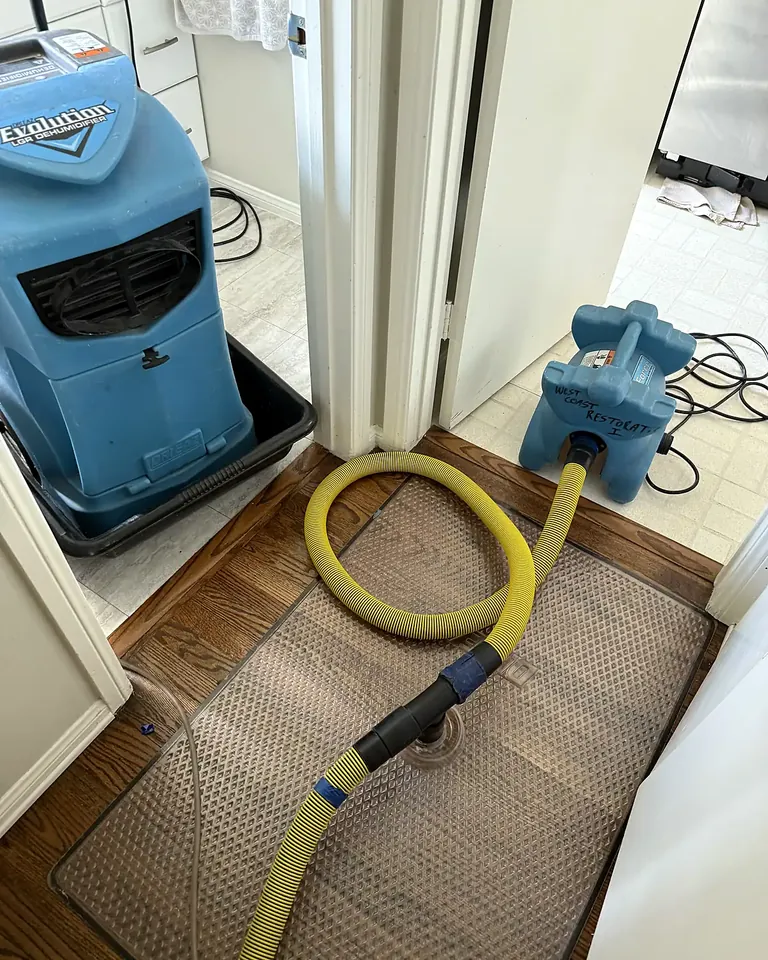
After extraction, drying may involve controlled airflow and dehumidification, with follow-up checks tailored to the materials. Ask how progress will be evaluated before new plaster, flooring, or trim conceals the area. Save safe photos and repair information for your records and any insurance discussion.
Protect older finishes through the repair sequence
In an Old Towne Orange home, an older plaster wall or wood floor may have repair or preservation concerns beyond the water loss itself. Ask which checks can be made from accessible edges before a larger opening is considered. If limited removal is necessary, discuss how the transition to retained material will be protected and recorded.
For a home with more than one floor, inspect the ceiling below a wet bathroom or laundry only when it is safe; water may follow framing before appearing in the room beneath. A stain that changes after fixture use is useful information, but it does not alone identify the failed connection. Record the timing and share it with the plumber and restoration assessor.
During drying, keep furniture and stored papers away from damp baseboards without dragging items through the affected area. Ask when follow-up checks will occur and what readings or material conditions support reinstalling trim. If an insurer requests an inspection, coordinate that request before permanent repairs where practical, and retain invoices for the plumbing repair separately from mitigation work.
Close out the repair with a clear record
Before the room is put back together, note which plaster, flooring, or trim was retained and which sections were opened or replaced. An older Orange property may include repairs from different periods, so keeping the scope specific helps future maintenance staff understand what was addressed. Share the record with the owner if the work was arranged by a tenant, and keep the insurer's instructions with receipts.
When furniture returns, leave access to any area that still needs a moisture check and avoid fastening new trim over a damp edge. If a stain appears again, compare its location with the documented repair rather than immediately repeating demolition. A focused follow-up can help determine whether the original source persists or another connection needs attention.
Orange questions
Can an Orange plaster wall be dried without removing it?
Possibly, depending on its condition and moisture. An assessment should guide whether access or removal is needed. Avoid covering a damp area before that decision.
Does damp wood flooring in Old Towne Orange mean the pipe is under it?
Not necessarily. Water can travel from another source; the leak and moisture path need investigation. Note which fixtures were used before it appeared.
Should I keep a plumber's repair invoice?
Yes. Keep source-repair records and safe photos alongside restoration documentation. They help establish the sequence of events.
When should wet materials be replaced in Orange?
That depends on material condition, water exposure, and drying results; a site assessment informs the decision. Historic or repaired finishes merit specific review.
Need help with property damage?
Tell us what happened in Orange and whether the water source is still active. For emergencies, call rather than waiting on email.
(800) 880-1425