Removing Water-Damaged Flooring: How to Decide What Comes Out
Flooring removal is not a one-size-fits-all response. The right choice depends on the water source, material, installation, subfloor, exposure time, and whether the assembly can be cleaned and dried in place.
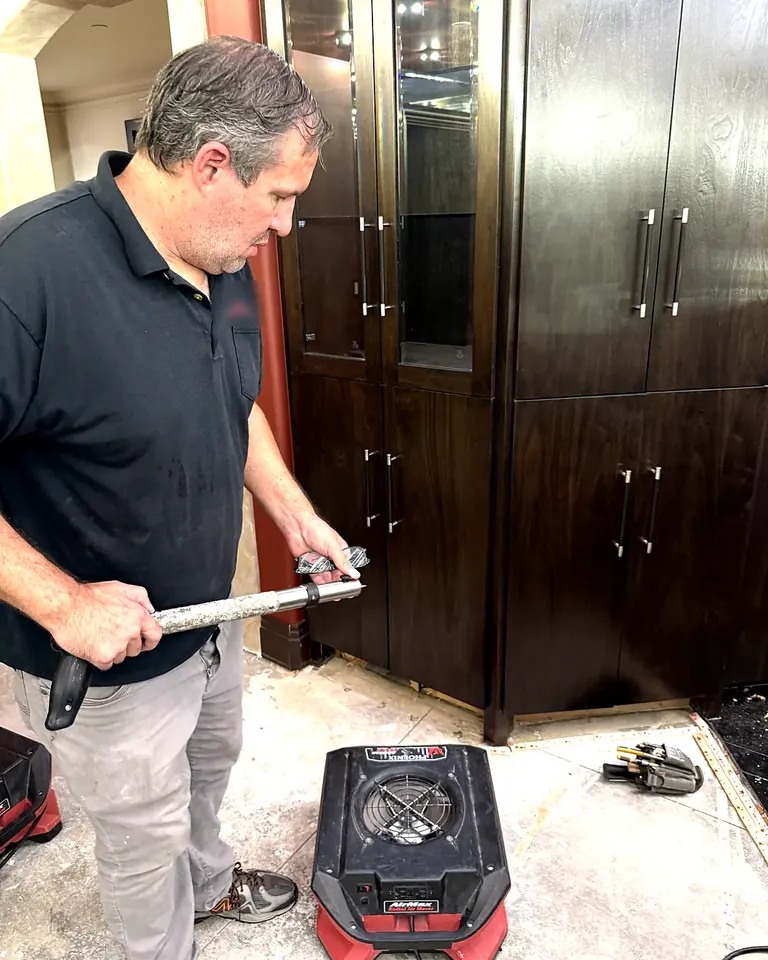
Identify the flooring assembly and water
Tile, vinyl, laminate, engineered wood, and carpet respond differently to moisture; so do their adhesives, pads, and subfloors. Water from a clean supply pipe presents a different cleaning question from sewage or floodwater. Before pulling material up, identify the water source when possible, note when it began, and keep people away from contaminated or electrically unsafe areas.
- Check for swelling, loose edges, cupping, buckling, or soft spots.
- Consider the underlayment and subfloor—not only the finish layer.
- Do not disturb materials suspected of containing hazardous substances; seek qualified guidance.
EPA distinguishes clean-water damage from contaminated-water damage and lists different drying actions for different flooring materials. [1] US EPA
Use measurements and access to guide the decision
Some materials may be dried in place with a suitable plan; others may trap moisture or lose integrity and need selective removal. Moisture measurements at accessible locations and comparison with unaffected areas help reveal whether water remains beneath the surface. The goal is not removal for its own sake, but a safe, verifiable route to dry and restore affected assemblies. See how extraction and structural drying differ for the steps that follow water removal.
EPA describes concealed moisture and using meters to evaluate affected building materials. [2] US EPA
Document before removal and coordinate repairs
Photograph the condition before work begins, including room context, transitions, and visible damage. Ask what will be removed and why, how dust and debris will be controlled, and how the exposed subfloor will be assessed. Keep records for your insurer, and do not install replacement flooring until moisture conditions are appropriate. A water damage restoration assessment can help determine whether extraction, drying, or selective removal is appropriate for the specific assembly.
- Record the material, affected area, and observed moisture conditions.
- Confirm how adjacent finishes and unaffected rooms will be protected.
- Verify the exposed structure is ready before rebuilding.
EPA says to ensure the foundation is dry before replacing flooring; absorbent materials that cannot be cleaned and dried should be discarded. [3] US EPA
Sources and references
- US EPA: Table 1: Water Damage — Cleanup and Mold Prevention (clean water)
- US EPA: Investigating and Evaluating Moisture Problems (Chapter 3)
- US EPA: Flood Cleanup to Protect Indoor Air and Your Health
Sources checked . These sources support the specific guidance cited beside each section; they do not endorse Flood-Pro or verify its services, equipment, or credentials.
Project decisions depend on the water source, materials, contamination, and safe access. Do not start fans until water is known to be clean or sanitary and electrical conditions are safe; visible or suspected mold needs appropriate assessment before airflow. Rental availability and Los Angeles-only rental coverage are company information, not agency recommendations. Insurance coverage depends on your policy and insurer.
Common questions
Does water-damaged flooring always need to be removed?
No. Material, water source, condition, installation, and moisture readings determine whether it can be cleaned and dried or needs removal.
Can laminate or wood flooring dry in place?
Sometimes, but swelling, buckling, trapped moisture, and the subfloor condition matter. An inspection and measurements are needed before deciding.
Should I remove wet flooring myself?
Avoid disturbing contaminated water, unsafe areas, or materials that could contain hazardous substances. Document conditions and seek qualified assessment for uncertain cases.