
Thermal Imaging for Hidden Leaks: What a Camera Can and Cannot Tell You
A thermal-imaging camera displays surface temperature differences that may help locate areas for closer inspection. It is a useful screening tool, not a moisture detector or a standalone diagnosis: building materials, drafts, sunlight, and plumbing conditions can create similar patterns.
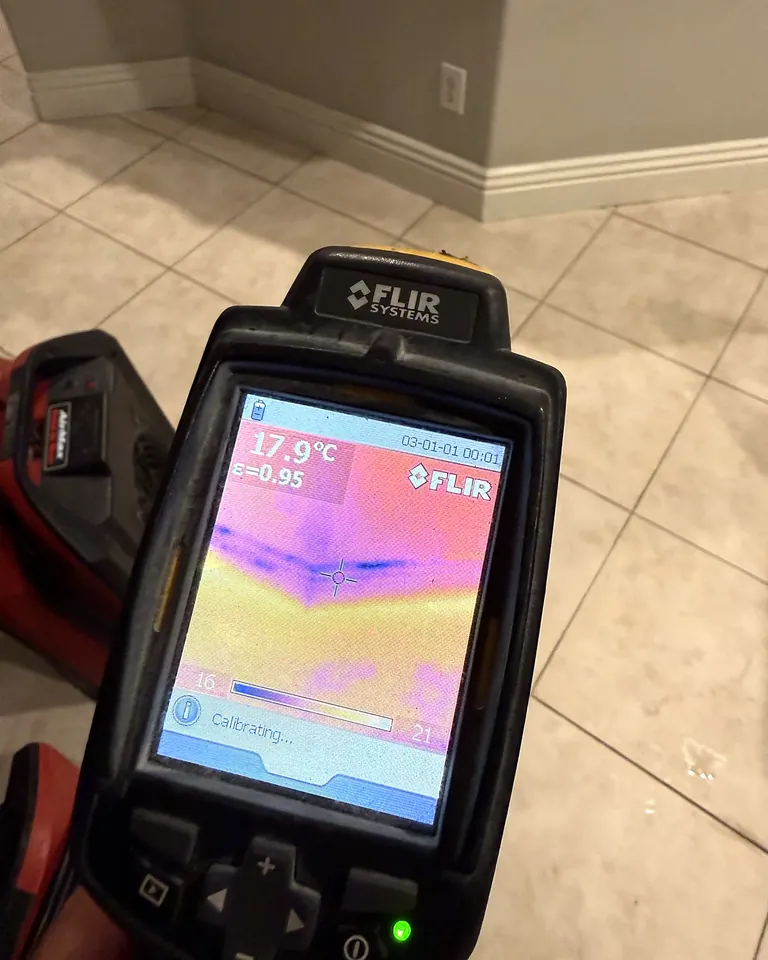
What thermal imaging actually shows
The camera measures infrared energy and translates it into a picture of relative surface temperatures. Evaporating moisture may make a surface cooler, while a hot or cold pipe can also change nearby temperatures. The image can point an inspector toward a suspicious area, but it cannot confirm the presence, depth, or source of moisture on its own.
- A thermal pattern is a clue, not proof of a leak.
- Insulation and surface finishes affect what appears on the screen.
- Temperature contrasts can come from sources other than water.
FLIR explains that a thermal camera detects temperature patterns, not moisture directly; a pattern does not prove water is present. [1] FLIR (equipment manufacturer)
Confirm the finding with other checks
An experienced inspector compares the pattern with visible conditions and uses appropriate moisture meters or other inspection methods to verify whether materials are wet. They may compare similar unaffected areas, look for plumbing routes, and repeat measurements as conditions change. See our first-day supply-line leak checklist if a leak is active or newly discovered.
FLIR recommends using a moisture meter to confirm suspected moisture identified by a thermal camera. [1] FLIR (equipment manufacturer)
Decide on the next step from evidence
If an area is confirmed wet, the next step is to locate and stop the water source, then determine which materials need drying or removal. A plumber handles pipe repair; a restoration professional can evaluate affected building materials and monitor drying. For persistent moisture or suspected growth, arrange an appropriate moisture assessment rather than relying on a thermal image alone.
- Keep photographs and notes of the location and timing.
- Do not cut into a wall based only on a camera image.
- Investigate recurring readings or odors even when surfaces look normal.
EPA recommends fixing the water source and drying affected items completely; a thermal image alone does not establish that work is finished. [2] US EPA
Sources and references
- FLIR (equipment manufacturer): How to Detect a Water Leak with Thermal Imaging
- US EPA: Mold Cleanup in Your Home
Sources checked . These sources support the specific guidance cited beside each section; they do not endorse Flood-Pro or verify its services, equipment, or credentials.
Project decisions depend on the water source, materials, contamination, and safe access. Do not start fans until water is known to be clean or sanitary and electrical conditions are safe; visible or suspected mold needs appropriate assessment before airflow. Rental availability and Los Angeles-only rental coverage are company information, not agency recommendations. Insurance coverage depends on your policy and insurer.
Common questions
Can a thermal camera see water inside a wall?
No. It shows surface temperature patterns that can be associated with moisture, but additional inspection and moisture measurements are needed to confirm wet materials.
Does a cool patch prove there is a leak?
No. Evaporation is one possible cause, but drafts, insulation gaps, pipes, and other temperature differences can look similar.
Who should repair a leak found during an inspection?
A licensed plumber should locate and repair the plumbing source. Restoration specialists can assess and dry resulting water damage.