Water Damage Restoration
From burst pipes to appliance overflows, water can spread into flooring, walls, cabinets, and framing. Our team extracts standing water, assesses affected materials, and dries the structure.
The short answer
Water damage restoration combines water removal, moisture assessment, controlled drying, and appropriate cleanup or repairs. It may be needed after a plumbing leak, overflow, or other water loss. Around Costa Mesa, the right plan depends on the water source, affected materials, concealed moisture, and safe access—not just visible wetness.
- When this service fits
- Leaks, overflows, and wet building materials after the source is controlled.
- What to do first
- Keep away from wet electrical systems and unstable ceilings; stop the source only if safe.
Before choosing the next step
Ask how moisture readings will be recorded, which materials can remain, and what must happen before repairs. A dry-looking surface is not a completion test.
Water extraction versus structural dryingContent updated . General guidance; conditions and availability require confirmation.
Stop the Damage Before It Multiplies
Water can spread into adjoining materials and concealed spaces. The effects depend on the water source, materials, temperature, and time exposed. Prompt assessment helps identify safety concerns and determine appropriate water removal, cleanup, and drying without assuming every loss follows the same timeline.
Our Water Restoration Process
Assessment & Inspection
We inspect affected materials and use professional moisture-detection methods to identify water that may be hidden behind walls or beneath flooring.
Water Extraction
We use powerful truck-mounted extraction units and specialized vacuums to remove standing water rapidly, reducing the drying time and preventing secondary damage.
Structural Drying
Industrial-grade air movers and desiccant dehumidifiers are deployed to draw out remaining moisture from the air and structural materials like wood, drywall, and concrete.
Drying Progress
We check moisture conditions as drying continues and document the affected areas and work performed.
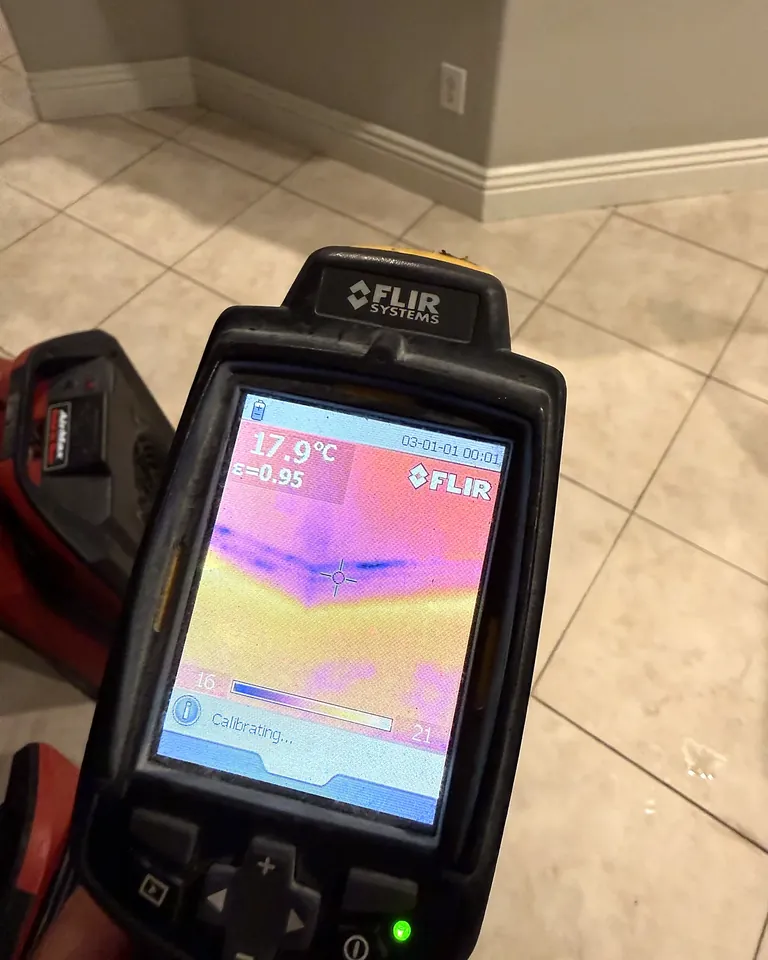
Thermal imaging helps locate hidden moisture beneath tile.
Common Sources of Water Damage
- Appliance leaks (washing machines, dishwashers, refrigerators)
- Burst or leaking supply lines and pipes
- Slab leaks under concrete foundations
- Water heater failures
- Toilet and plumbing overflows
Insurance Claim Support
We work with major insurance carriers and provide restoration documentation to support communication about the project scope.
Get Help With Insurance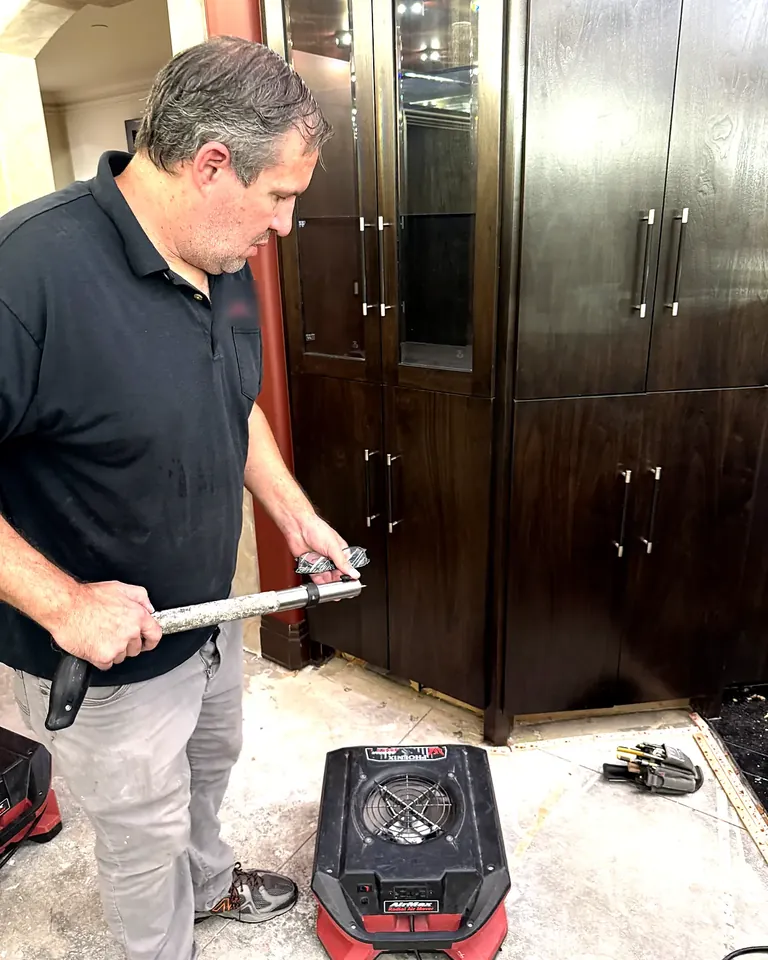
Technician removing flooring damaged by water before restoration.
Common questions
What should I do first after a water leak?
If safe, stop the water source and keep people away from wet electrical equipment or unstable ceilings. Photograph visible damage without entering unsafe areas, then call Flood-Pro at (800) 880-1425 to discuss extraction, moisture assessment, and drying.
Is water extraction the same as structural drying?
No. Extraction removes accessible standing water. Structural drying addresses moisture remaining in floors, walls, and other materials, with moisture readings used to assess progress rather than appearance alone.
Where does Flood-Pro provide water damage restoration?
Flood-Pro is based in Costa Mesa and serves nearby communities, subject to address confirmation and availability. Call (800) 880-1425 to check your property. Equipment rentals are a separate Los Angeles-only service.
Helpful next steps
Explore practical restoration guidance and service information for the Costa Mesa area.