Trace the water beneath finished surfaces
In a Balboa Peninsula home, water from a laundry connection may travel below tile or engineered flooring before reaching a wall. Custom millwork and layered floor assemblies can hide damp materials, so a dry-looking surface is not proof that the structure is dry. The inspection should follow likely pathways rather than stop at the first stain.
A plumbing specialist addresses a leaking line; restoration work evaluates materials affected by that leak. If a floor feels warm or unexplained dampness returns, treat it as a clue, not a confirmed slab leak. Avoid opening expensive finishes until the source and affected area are better understood.
A cabinet toe-kick, island base, or flooring transition can show swelling before a broad stain forms. Note whether doors no longer close or finish joints have changed, but do not force cabinetry apart to inspect it. A moisture map can guide small, purposeful access points instead of unnecessary removal across an entire finished room.
If a leak is above a finished ceiling, do not puncture a bulge to release water; the material may be unstable and wiring could be nearby. Move furnishings only if the floor and route are safe. Tell the assessor whether a fixture continued running, since that affects how long materials may have been exposed.
Drying requires a sequence, not just equipment
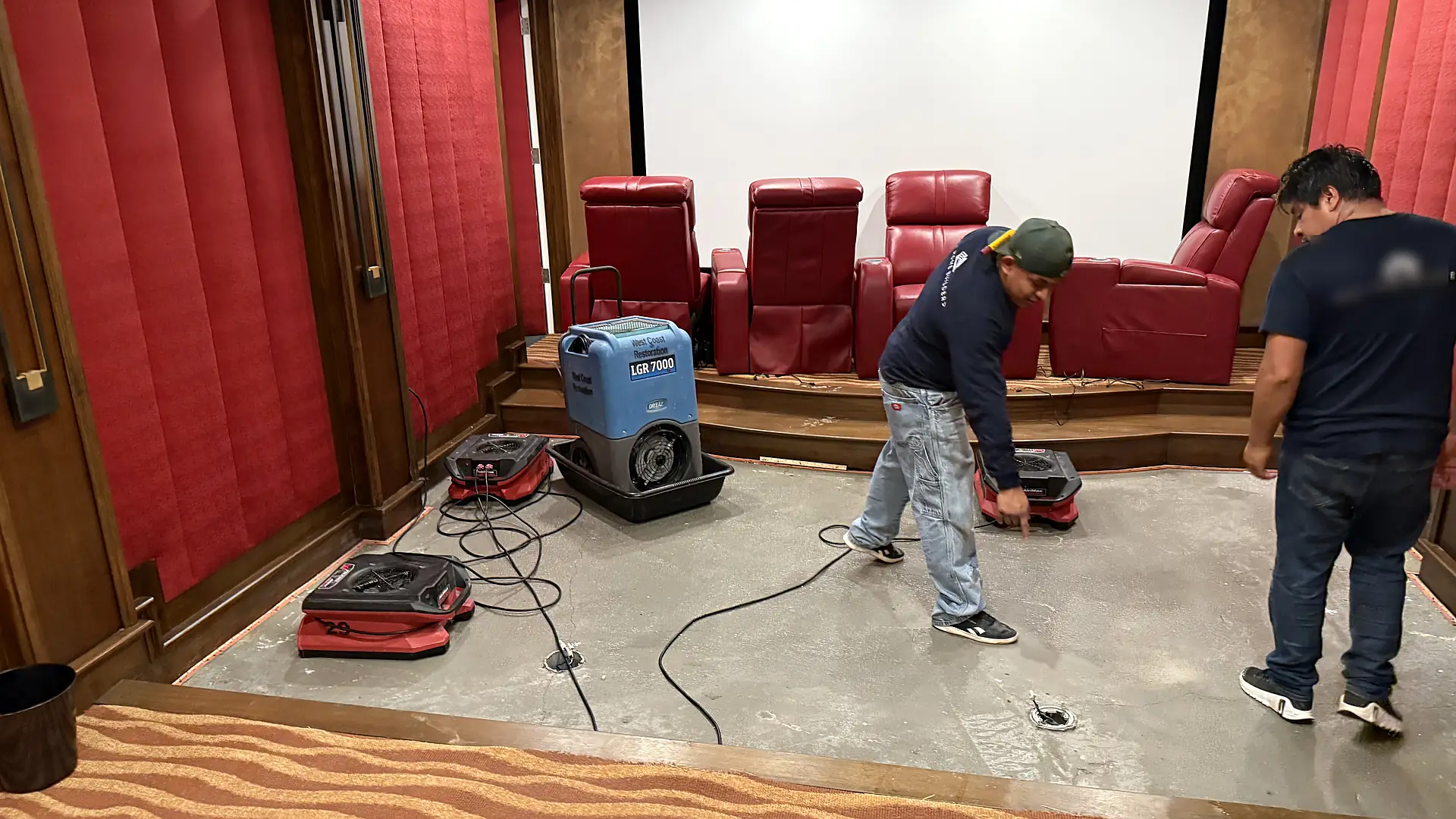
After the source is controlled, accessible water may be extracted and moisture in surrounding materials checked. Depending on readings and construction, work can include selective removal, drying, and follow-up measurements. A contents-conscious plan may protect unaffected furnishings and establish a route that does not carry water through clean rooms.
For a Corona del Mar condo, coordinate access with building management when shared plumbing or neighboring units could be affected. Keep photographs and repair records for an insurance discussion; the insurer, not the restoration contractor, determines coverage.
Before work starts, discuss which areas need to remain accessible for readings and how furniture or rugs will be protected. Restoration documentation can record observed conditions and mitigation actions; retain the plumber's diagnosis separately because it explains the source repair. Avoid reinstalling a floating floor or closing a cabinet base while damp layers underneath still need verification.
For an island or peninsula property with limited staging space, agree where equipment can operate without blocking exits or shared access. Keep pets and children away from cords and work zones. Ask how progress updates will be shared if the owner is not on site, and retain copies of moisture notes with the repair invoice.
When it is not a clean-water loss
Water that entered from the shoreline, a drain, or a sewer system needs a different safety and cleaning approach. Do not direct fans across uncertain or contaminated water. Flood-Pro can discuss the source by phone and help distinguish water damage restoration from flood cleanup or sewage cleanup needs.
If saltwater exposure is possible, mention it specifically rather than describing the event only as a leak. Metal fasteners, appliances, and concealed connectors may need closer evaluation after contact with coastal water. Do not energize wet equipment to test it; have electrical components assessed by a qualified professional before normal use resumes.
If you rent the property, alert the owner before arranging finish replacement so source repair and restoration records remain aligned. For an HOA-managed building, ask who will inspect common plumbing or exterior assemblies. These handoffs help avoid closing a wall while a shared source remains active.
Newport Beach questions
Why is my Newport Beach floor wet away from a pipe?
Water can move beneath floor coverings or along framing. An assessment can trace moisture beyond the visible wet spot.
Can drying save custom wood cabinets?
It depends on exposure, construction, and condition. Prompt assessment helps determine whether cleaning and drying or removal is appropriate.
Should I call a plumber or Flood-Pro first?
Stop an active leak if safe and arrange plumbing repair. Call Flood-Pro for assessment and mitigation of wet building materials.
Does a damp floor mean a slab leak?
Not necessarily. Several sources can cause dampness; a qualified plumbing diagnosis and moisture assessment are needed.
Need help with property damage?
Tell us what happened in Newport Beach and whether the water source is still active. For emergencies, call rather than waiting on email.
(800) 880-1425