
Follow the water through older finishes
A drip in an Old Towne room may begin at a roof edge or opening elsewhere and travel along framing before reaching plaster. The stain does not pinpoint the exterior defect. Note its location, when it appeared, and any prior leak or repair in the same area.
Do not climb onto a wet roof or stand beneath a sagging ceiling. If water is near wiring or a light fixture, leave the area and seek appropriate help.
Stabilize the exterior before drying inside
A qualified contractor may need to secure a roof, window, or door opening so new rain does not undo interior work. Once entry is controlled, evaluate plaster, trim, insulation, and flooring for moisture. Historic or fragile finishes merit discussion before removal.
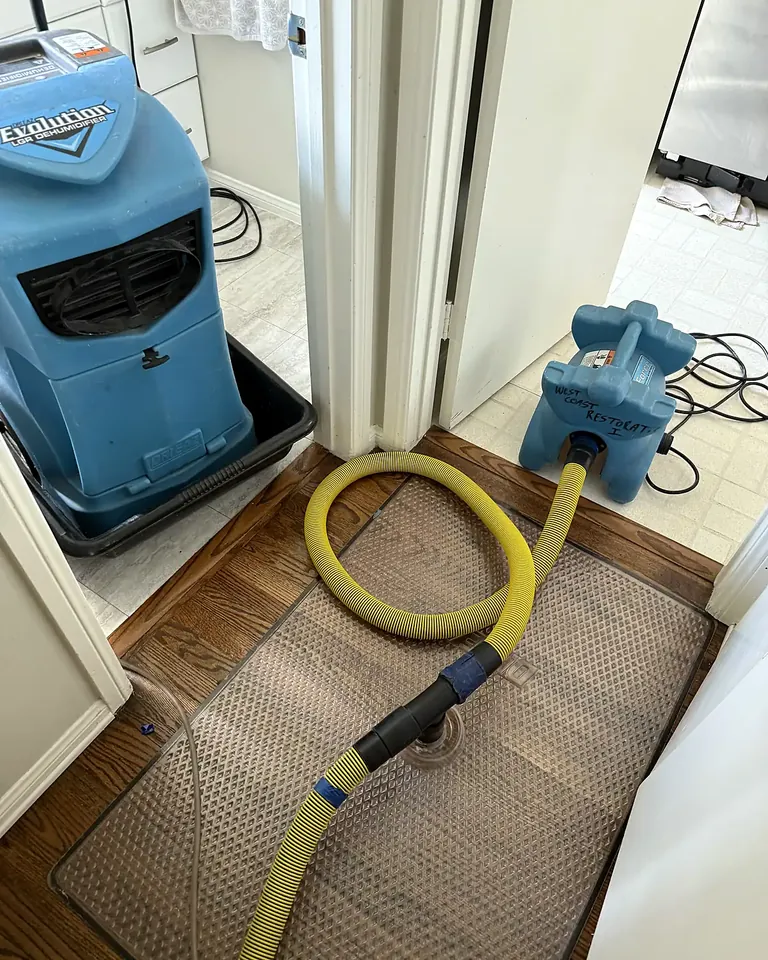
Extraction, selective access, and dehumidification may be appropriate depending on the materials. Follow-up checks help determine whether a concealed cavity is dry before it is closed.
Keep a record and coordinate repairs
For a rental or shop, tell the property owner or manager when rain affects shared space or another tenant. Photograph conditions safely, keep the storm and repair timeline, and ask your insurer about documentation. Ground-level outdoor water may require a separate contamination-aware flood cleanup assessment.
Protect interiors while the exterior is stabilized
An Old Towne ceiling stain can be displaced from the roof defect by framing or a prior repair, so do not cut a large opening based only on the drip location. A qualified exterior professional should identify and safely address the entry point. Stay away from wet electrical fixtures and any plaster that is bulging or separating from its support.
Once further rain entry is controlled, document which rooms, trim, and flooring became wet. Older plaster may dry differently from later drywall additions, and water can be held behind a painted surface. Extraction or selective access should be based on the assembly and moisture findings, with follow-up checks before the surface is closed.
For tenants and shop operators, coordinate a schedule that leaves safe access to unaffected rooms and keeps customers away from wet floors or debris. Keep temporary-protection receipts and notes about the exterior repair. If ground water entered at a doorway, report that route separately because it may need a different cleaning decision than rain through a roof.
Check the wall and ceiling before closing them
A follow-up should consider whether water reached insulation, plaster keys, trim, or flooring under the visible stain. Avoid reinstalling a patch solely because the drip has stopped; the exterior opening must be secured and the interior materials checked. Keep the contractor's repair description with restoration notes so a later Orange property inspection can distinguish the repaired entry from any new leak.
If there is a second storm before permanent roof work, report any new water separately and photograph it only from a safe position. A property owner can compare the location and timing with the earlier incident. Keep interior drying records distinct from exterior repair receipts, and ask the insurer whether it needs to review the area before final finishes are installed.
Orange questions
Why is an Orange ceiling stain away from the roof edge?
Water can follow framing or other paths before it becomes visible indoors. The entry point needs its own inspection.
Can I climb up to cover a leaking Orange roof?
A wet roof is not a safe place to investigate a leak yourself. Arrange qualified exterior help and avoid unstable ceilings.
Should historic plaster be removed after an Orange storm leak?
Not automatically. Assess its condition and moisture before choosing selective access or removal. Note earlier repairs or patched areas.
Is ground-level runoff treated like roof rainwater?
Not necessarily. Outdoor water may carry contaminants and needs an assessment based on its route. Keep it separate from clean contents.
Need help with property damage?
Tell us what happened in Orange and whether the water source is still active. For emergencies, call rather than waiting on email.
(800) 880-1425