
Check common leak paths in the home
A water heater closet or laundry area can release water into nearby flooring and the wall behind it. In a remodeled Mission Viejo home, newer finish materials may cover an older assembly. The visible puddle and the underlying wet area are not always the same size.
A licensed plumbing professional should locate and repair the active source. Restoration then evaluates what materials were affected and whether they can be dried or need selective removal.
Trace moisture before replacing finishes
Moisture checks can follow water along a baseboard, through underlayment, or into adjacent rooms. Extraction removes liquid that can be reached, while drying addresses moisture retained in materials. Avoid electrical hazards and do not assume a hard surface is dry underneath.
For an HOA-managed property, notify the association if a shared line or another home may be involved. Access to adjoining areas may be necessary to understand a continuing leak.
Use progress checks to guide repairs
A practical plan records initial conditions, identifies materials for removal or drying, and checks progress before new flooring or drywall is installed. Keep repair invoices and photos for your records. If filing a claim, ask your insurer what documentation it needs; coverage depends on the policy.
Follow water through older and remodeled rooms
A water heater closet in a Mission Viejo house may share a wall with a bedroom or hallway, and a remodeled floor can conceal a damp layer beneath the visible surface. Note which fixtures were in use and whether the wet area grows after water is shut off. Do not assume that a room on the other side of the wall is unaffected simply because its paint looks normal.
A plumber should identify and repair the source; restoration assessment then considers flooring, cabinet bases, and wall cavities that became wet. Ask whether the inspection includes the room below if a leak occurred upstairs. This is especially useful when a stain forms at a ceiling joint rather than directly under the fixture.
Before repair finishes are ordered, preserve access for follow-up moisture checks and ask what conditions will support closing the assembly. Keep the plumbing invoice, photos, and restoration notes together. If the property is governed by an association, confirm access rules for shared lines or common spaces before opening a wall or moving equipment through a common hallway.
In a home that has had a kitchen or bath remodel, share the approximate renovation scope with the assessor; new tile or cabinetry can cover older materials and change access. Avoid removing a toe kick or flooring simply to look for a leak. A measured approach can determine whether moisture is present and where a limited opening may be useful.
When the area is ready for repairs, confirm that flooring transitions, cabinet edges, and the wall behind the water heater are included in the finish plan. Keep the plumber's invoice separate from restoration charges and preserve progress notes for your insurer. If an association must approve work near common piping, get access arrangements confirmed before trades arrive.
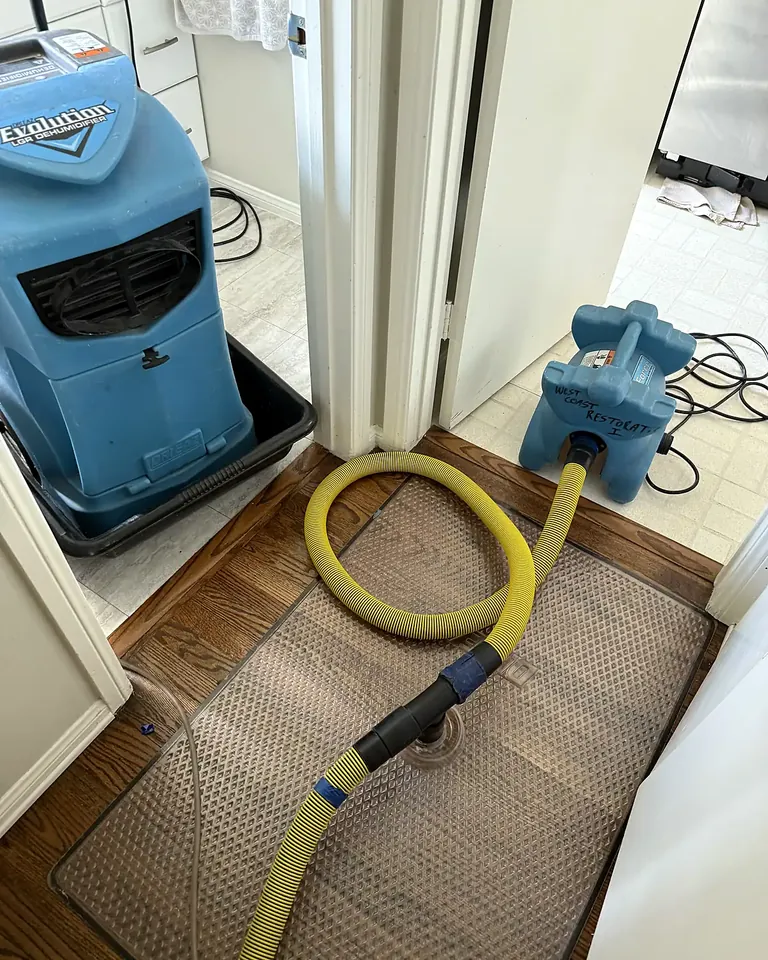
Mission Viejo questions
Can a water heater leak affect rooms in a Mission Viejo home?
Yes. Water may move beyond the closet or utility area into adjoining flooring and wall materials. Check nearby rooms as well.
Does a dry tile surface mean the Mission Viejo subfloor is dry?
No. Moisture can be present below or beside the tile; an assessment checks concealed materials. Floor edges can offer useful clues.
Should I replace flooring before the leak is repaired?
No. Stop the source and assess affected materials before installing replacement finishes. Keep the area accessible for follow-up checks.
Will my insurer pay for water restoration in Mission Viejo?
Only your insurer can determine coverage under your policy and the cause of the loss. Keep repair and mitigation records.
Need help with property damage?
Tell us what happened in Mission Viejo and whether the water source is still active. For emergencies, call rather than waiting on email.
(800) 880-1425