Distinguish an indoor leak from exterior water
A failed washing-machine line is different from rain runoff entering at a garage threshold or a drain backing up. Exterior water may collect soil and contaminants on its route, while sewage requires particular caution. Explain the path it took before cleanup methods are chosen.
Do not enter a flooded garage if outlets, a panel, or powered equipment may be wet. Move people away and report any shared community area to the property manager or HOA.
Remove water without overlooking hidden dampness
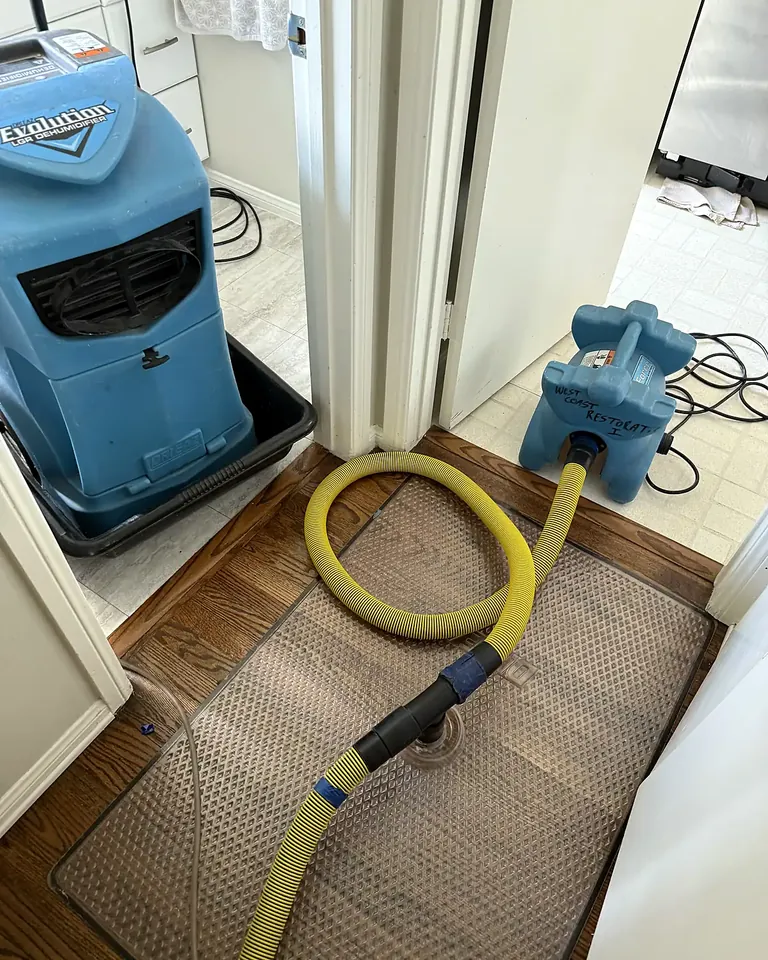
Extraction removes standing water, but moisture can remain beneath flooring, behind baseboards, or in stored porous items. Assessment helps distinguish contents that can be cleaned from those that may need removal. Avoid turning on fans until the water source and contamination risk are known.
A garage can contain heavy storage, vehicles, and electrical systems that restrict safe access. Do not move equipment through standing water to reach belongings.
Address the return path and document conditions
A plumbing source, backed-up drain, and exterior drainage route call for different repairs. Coordinate source work with the responsible professional and keep a dated record of water entry and mitigation. Photos taken from a safe location and an item list may help with an insurer conversation, but policy terms control coverage.
Use the garage layout to plan safe removal
A Mission Viejo garage may store vehicles, tools, household boxes, and equipment near outlets or a water heater. Do not walk through water to reach them or start a vehicle when electrical components may be wet. From a dry, safe spot, note the water line, identify whether it entered at the door or from a drain, and tell responders if a shared wall or community space is involved.
Once hazards are addressed, extraction can remove accessible water, but stored items and the wall-floor joint need separate evaluation. Cardboard and upholstered contents may absorb outdoor water; hard items may need appropriate cleaning before they return to a clean area. Keep an inventory rather than discarding everything before documenting it.
After the source is corrected, check whether water reached drywall, baseboards, or flooring beneath shelving. A garage slab that appears dry does not confirm the wall cavity is dry. Coordinate with an HOA or property manager when common access is needed, and keep source-repair information with cleanup and drying notes.
If the garage connects to a laundry or interior hallway, check those thresholds once the space is safe; water can be carried on shoes or move beneath a door. Keep tools and stored boxes off wet surfaces while the assessment is pending. A clear path to the electrical panel should be maintained only if it can be reached without stepping into water.
After cleanup, return items in stages and leave access to wall bases and outlets until follow-up checks are complete. Note whether exterior runoff, plumbing, or a drain was the entry route so any needed repair addresses the source. For a shared drive or storage area, send the manager the cleanup timeline and ask whether neighboring spaces need inspection.
Mission Viejo questions
Is water pooled in a Mission Viejo garage safe to enter?
Not if electrical systems may be wet or the source is unknown. Avoid entry until hazards are addressed, even if the water is shallow.
Will extraction dry Mission Viejo garage walls?
No. Moisture in walls and other materials needs separate assessment and drying. Check behind stored items only after access is safe.
Should I use fans on water from outside?
Wait until its source and possible contamination are assessed; airflow can spread contaminants. Keep the garage closed off meanwhile.
What if the flooded area is shared by my Mission Viejo community?
Keep away from hazards and notify the HOA or property manager while arranging appropriate cleanup. Describe any common equipment nearby.
Need help with property damage?
Tell us what happened in Mission Viejo and whether the water source is still active. For emergencies, call rather than waiting on email.
(800) 880-1425