
A ceiling drip may start elsewhere
Water can move along roof framing before appearing in a bedroom or hallway. In a Mission Viejo house with a sloped roof, the indoor stain may be distant from the failed flashing or opening. Past repairs and the storm timeline are useful context, but inspection is needed to locate the source.
Stay clear of a bowed ceiling and do not climb onto a wet roof. Photograph conditions only from a safe location.
Stop new rain before restoring finishes
A qualified exterior contractor may need to secure the opening so fresh rain does not keep wetting insulation and drywall. Once the source is controlled, assess wall cavities, ceiling materials, and flooring for retained moisture.
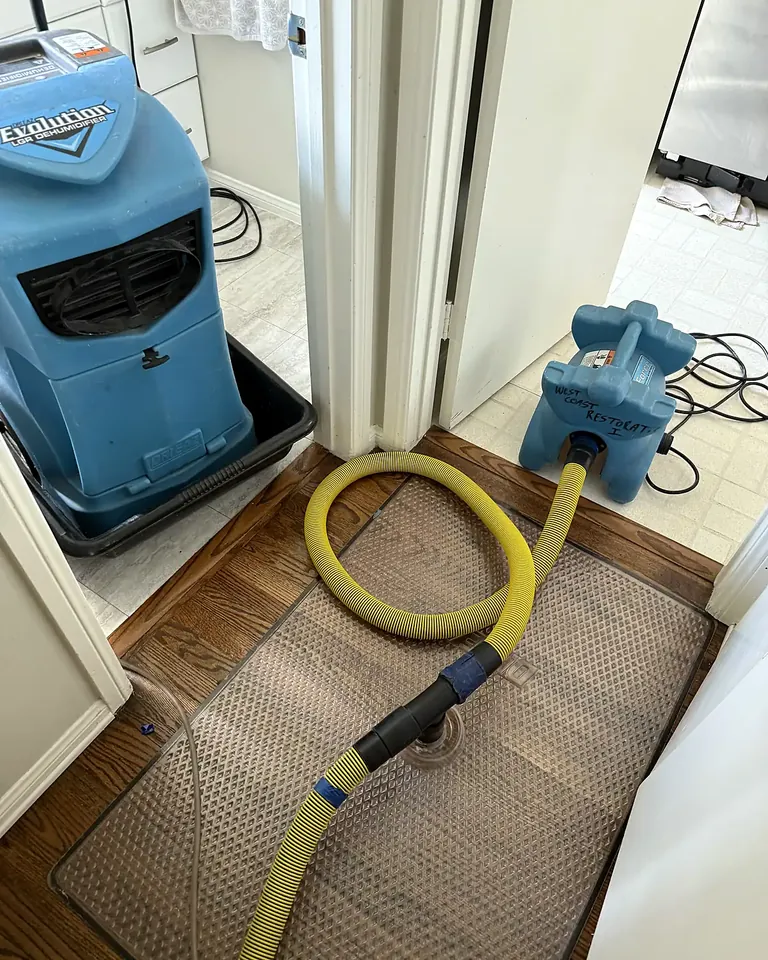
Extraction, selective opening, and dehumidification may be appropriate according to the damage. Moisture checks can inform when it is safe to close the assembly or replace finishes.
Coordinate community and insurance details
Tell an HOA or property manager if shared roofing or another residence may be involved. Keep dates, safe photos, and records of temporary or permanent repairs. Ground-level runoff may require flood cleanup with a separate assessment of contaminants, rather than a roof-leak-only plan.
Stabilize the roof opening, then inspect indoors
A leak in a Mission Viejo home with a sloped roof may run down framing before showing at a bedroom ceiling or closet wall. The first drip is a clue, not a map of the exterior defect. Stay off wet roofing and keep people away from a bowed ceiling; contact an appropriate exterior contractor to inspect and secure the opening.
After the source is controlled, check insulation, drywall, trim, and flooring below the entry path. Water may travel around a framing member or follow an existing repair, so note where it appears as conditions change. Controlled access can reveal a damp cavity, but avoid removing large sections without a reasoned scope and safe work setup.
If the roof is maintained by an association, report the leak and confirm who will arrange access before permanent repairs. Keep temporary protection dates, contractor notes, and photos in one record. If runoff instead entered through a garage threshold, describe that separately; outdoor water may need a different cleaning assessment from a roof leak.
A Mission Viejo roofline may cover several rooms, so note whether water appeared at a ceiling joint, closet, or window after the same storm. That pattern helps direct inspection, but only a qualified exterior review can establish the opening. Do not cover an active leak from a ladder or enter an attic with unstable framing or wet electrical equipment.
Once repairs are made, ask how nearby insulation and wall materials will be checked before they are closed. Keep temporary protection and permanent repair dates separate in the file, and notify the HOA if a common roof was involved. A storm claim may require its own documentation; save records and let the carrier explain policy terms.
Mission Viejo questions
Why can a Mission Viejo roof leak show up in another room?
Water may travel along framing before appearing on an interior ceiling or wall. Record where and when it first showed.
Should I climb onto my roof to stop a Mission Viejo leak?
No. Avoid a wet or damaged roof and contact qualified exterior repair help. Keep clear of unstable interior ceilings too.
Can new drywall go in before a Mission Viejo storm leak is fixed?
First stop the entry and assess moisture; otherwise new finishes may be exposed again. Ask about follow-up checks before closing the wall.
Is rain entering a Mission Viejo garage a roof leak?
Not necessarily. Describe the entry route; ground-level outdoor water may need a flood cleanup assessment. Avoid standing water near electrical equipment.
Need help with property damage?
Tell us what happened in Mission Viejo and whether the water source is still active. For emergencies, call rather than waiting on email.
(800) 880-1425