
Trace plumbing water through the building
In an established Westminster home, a water-heater leak can spread across a garage floor or into a wall shared with the house. A kitchen line in an apartment may affect the unit below or an adjoining suite. Identify the origin and whether another resident has reported moisture.
Surface appearance can understate what is trapped under a floor covering or behind cabinetry. A moisture assessment clarifies the boundary before materials are removed or rebuilt.
Separate plumbing repairs from drying work
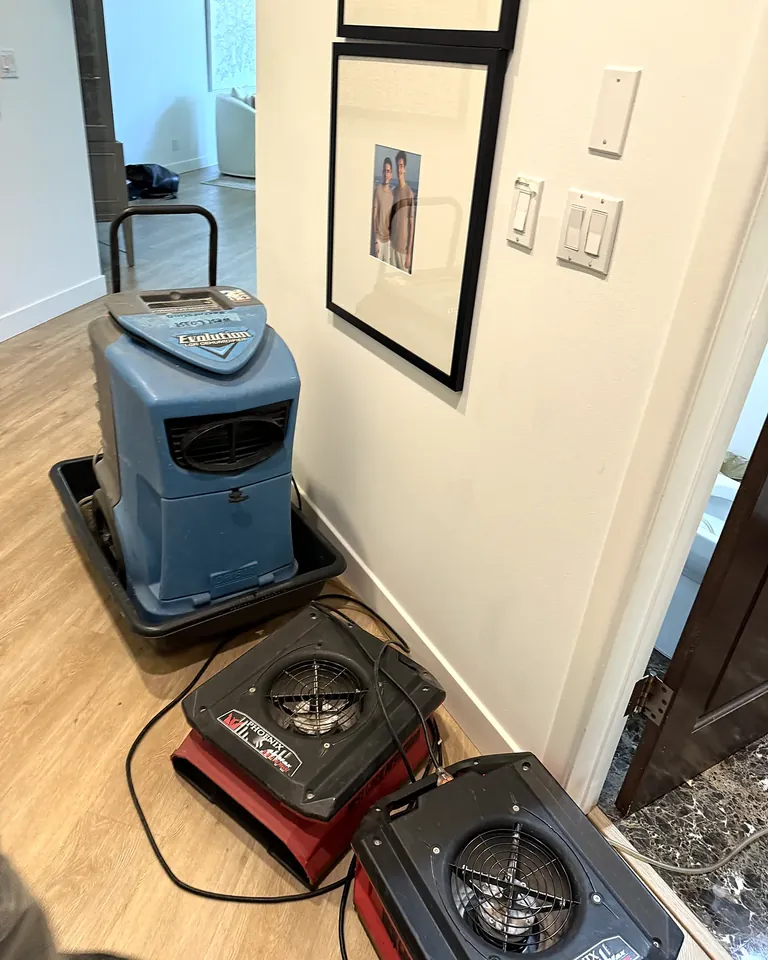
A plumber repairs the leak; restoration addresses its effects. Depending on the assembly, work may involve extraction, selective opening, dehumidification, and follow-up readings. Do not rely on surface fans where water may be contaminated or electrical conditions are uncertain.
For a rental or business, get the manager involved before work affects common piping, a shared wall, or tenant access.
Plan a clean path back to normal use
Tell the team whether the space is occupied or open to customers and identify contents that need protection. Ask what moisture readings or conditions will guide completion before flooring or baseboards are replaced.
Keep photos and repair notes for insurer discussions. Coverage is a policy decision, while restoration records help describe the observed damage and work performed.
Inspect beyond the visible heater area
In a Westminster tract home, a garage heater may sit beside storage and a wall shared with a laundry room or living area. After a plumber stops the leak, check the threshold, wall base, and the opposite side of the partition. Do not handle a wet appliance connection or electrical panel; explain those hazards before anyone approaches.
A restoration assessment should distinguish water on the concrete from moisture held in drywall, insulation, baseboards, or flooring at the house entrance. Ask which readings support leaving material in place and what limited access might be needed if the wall remains damp. A dry-looking slab alone cannot answer whether the adjoining wall assembly is ready to close.
If an HOA or landlord controls shared plumbing, notify them before opening a wall or moving fixed equipment. Keep photographs of the source and any repair record. Store wet boxes separately from dry goods, and leave the wall accessible for follow-up checks rather than reinstalling shelving immediately.
Keep the repair sequence clear
A plumber resolves the failed valve or supply line; restoration checks and dries resulting building materials. Record each visit and the areas inspected so source work is not confused with finish replacement.
Before new flooring or trim goes in, ask whether adjacent rooms were included in the drying assessment. This is especially useful when a garage and living area share one wall or threshold.
Westminster questions
Can a Westminster water-heater leak spread under a garage wall?
Yes. Water can move to adjoining floor edges or into a shared wall; inspect beyond the heater footprint.
Do I call a plumber or restoration company first?
Stop immediate danger if safe, then address the source with a plumber and resulting moisture with restoration help.
Could an upstairs leak affect another apartment?
Yes. Notify management and the lower resident, and assess both the source unit and affected space. Water can follow framing or pass through a ceiling before a stain appears, so record the location and timing without assuming which tenant is responsible.
Can new flooring go over a dry-looking slab?
Not until the relevant assembly and moisture conditions are checked and the source is resolved. A Westminster garage-to-house transition can conceal moisture at wall edges or below a covering, so ask what areas were tested before trim or flooring is installed.
Need help with property damage?
Tell us what happened in Westminster and whether the water source is still active. For emergencies, call rather than waiting on email.
(800) 880-1425