Trace the leak through connected spaces
In a Northwood house, water from a laundry connection may cross a room beneath finished flooring before it reaches a wall. In a Turtle Rock condo, a ceiling mark could originate in a unit above. Record where the first signs appeared and whether they change when fixtures are used; those clues help direct an inspection without assuming the cause.
A plumber addresses a failed pipe or fixture. Restoration work evaluates the building materials affected after the leak is stopped. Those are related but distinct tasks, especially when the wet area extends beyond the visible drip.
In a Woodbridge kitchen, water may run behind a toe kick and reach flooring outside the cabinet footprint; in an upstairs laundry, it may follow a doorway into a hall. Compare affected rooms with the likely route, and tell the assessor about any recent cabinet or floor installation. That context helps plan access while limiting unnecessary disturbance to finished areas.
Assess materials, not just the puddle
Extraction removes accessible water; it does not show whether underlayment, cabinet sides, or a wall cavity remain damp. Moisture assessment can map affected materials and guide whether drying, limited removal, or further investigation is appropriate. Keep clear of wet electrical equipment and any ceiling that appears unstable.
Attached homes and condos may need coordinated access to adjoining rooms or units. Tell the manager if water may have crossed a shared boundary so inspection and source repair can be arranged without delay.
Keep belongings clear of wet baseboards and leave the affected surfaces visible for inspection. If a ceiling feels soft, bows, or is near a light, do not press it or stand beneath it. A drying plan can distinguish materials that can remain in place from assemblies that need controlled access, and later checks help verify that moisture is declining.
Dry and document with a clear plan
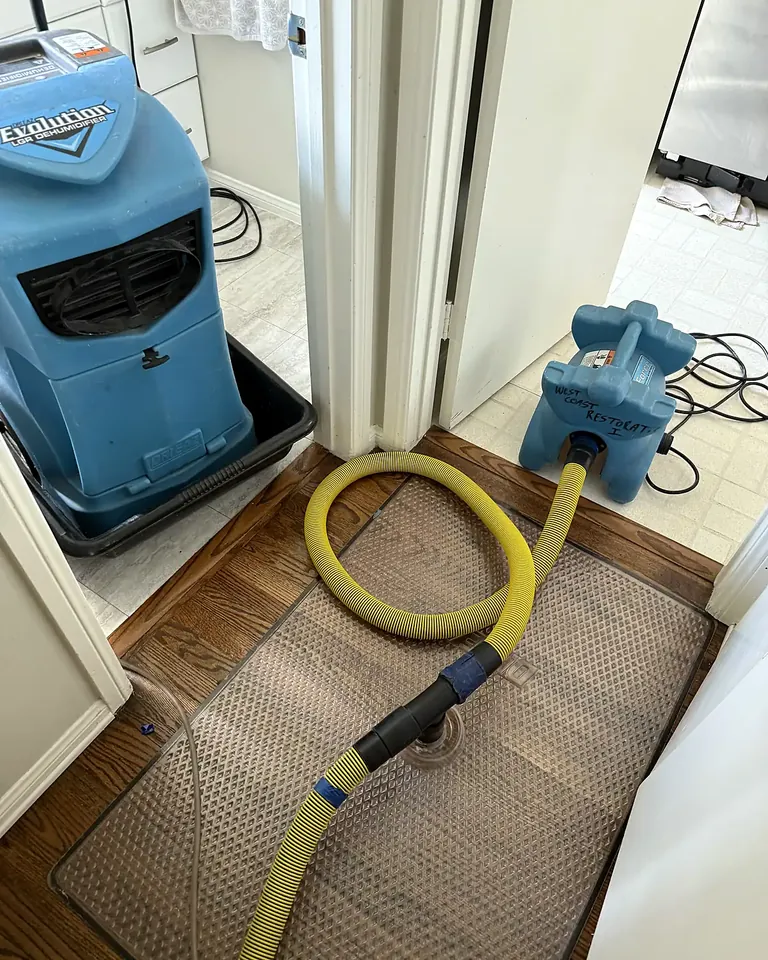
A plan may include extraction, protection of unaffected contents, controlled opening of wet assemblies, dehumidification, and follow-up moisture checks. Ask what conditions will indicate that drying is complete before new finishes cover the area. Keep safe photos and repair records for your own files and any insurer discussion.
Before contents are moved back, confirm that the leak repair is complete and that the floor or wall can accept replacement materials. For shared housing, agree on who will unlock rooms, communicate with a downstairs neighbor, and receive progress updates. Restoration documentation can record observed conditions and work performed, while final scope and coverage remain separate decisions.
Before the final finish work
Once readings and material condition support closing an assembly, discuss how replacement flooring, baseboards, or cabinet panels will meet the retained surfaces. A repair should not conceal an active leak or leave damp material trapped behind a new finish. Keep the source-repair invoice and restoration notes together; if a claim is open, ask the carrier whether it needs an inspection before permanent repairs proceed.
In an Irvine townhome, note any building requirements for elevator use, hallway protection, or equipment placement before the repair crew arrives. Keep a record of what was removed and what stayed in place so the owner can compare the finished repair with the original affected area. If new dampness appears, report it before painting or reinstalling trim.
Irvine questions
My Irvine condo ceiling is stained; should I call upstairs first?
Notify the HOA or manager and the neighbor if appropriate, but do not assume the source. A plumber may need to locate the leak while the wet materials are assessed.
Can a dry-looking Irvine floor still hold moisture?
Yes. Moisture can remain beneath a floor covering. An assessment can check the underlayment and nearby materials.
Who repairs the leaking pipe?
A plumber or responsible building contractor repairs the plumbing source; restoration addresses resulting material damage.
Will drying equipment be needed in every room?
Not necessarily. Equipment and placement depend on moisture findings, materials, and the affected area. Readings and room conditions guide where it is useful.
Need help with property damage?
Tell us what happened in Irvine and whether the water source is still active. For emergencies, call rather than waiting on email.
(800) 880-1425