Kitchen Water Damage After an Appliance Leak in Costa Mesa
A kitchen appliance leak may leave only a small puddle in view while water reaches a cabinet base, toe kick, adjoining room, or floor layer. The visible wet spot does not establish how far moisture traveled or whether the source has stopped. This guide explains what Costa Mesa-area property owners can do safely, what to document, and when to arrange an assessment. It is general guidance—not a diagnosis, plumbing repair instruction, or insurance coverage decision.
The short answer
If a dishwasher, refrigerator line, or sink connection leaks, keep people away from electrical hazards, shut off the source only if it is safe, and arrange plumbing repair. Water can travel beneath cabinets and flooring, so document what you can see and have affected materials assessed before closing or replacing finishes.
1. Put safety and source control first
Keep people and pets out of standing water, especially if it is near outlets, appliance cords, or other electrical equipment. Do not reach behind a wet appliance, touch switches in a wet area, or move a heavy refrigerator or dishwasher through pooled water. If the situation presents an immediate electrical or structural danger, leave the area and contact the appropriate emergency or utility service.
If the shutoff is clearly identified, safely accessible, and you are authorized to use it, stop the water supply. Do not enter a wet utility area or operate unfamiliar valves. Contact a qualified plumber to identify and repair the source; do not run the appliance again just to see whether the leak returns.
Related: First steps after a supply-line leak · Water damage restoration service
Guidance references: [1] OSHA: Flood Preparedness and Response — Response/Recovery; [2] US EPA: Mold Cleanup in Your Home
2. Check nearby materials without taking them apart
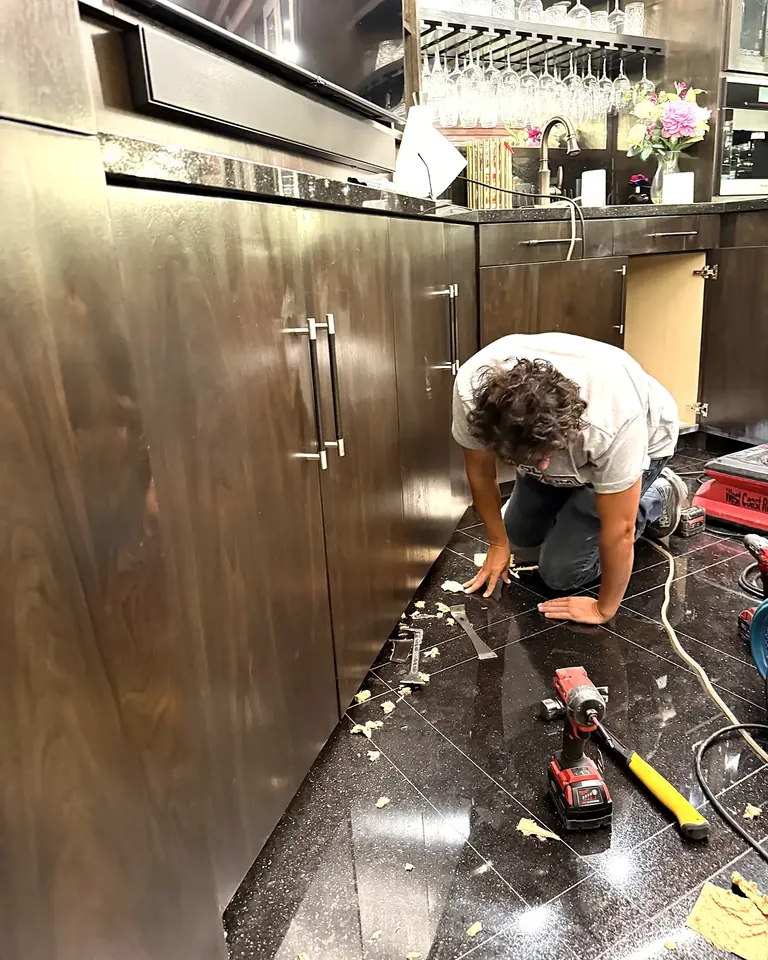
From a dry, safe position, note whether water reached the cabinet toe kick, the cabinet floor, flooring seams, baseboards, or the room on the other side of a wall. Look for changes such as swelling, lifting, discoloration, or dampness, but do not pry off finishes or cut into a cabinet or wall to search for moisture.
Water can move underneath continuous flooring or into concealed edges before a stain appears. EPA describes moisture meters as tools for investigating moisture problems; a visual check or one surface reading is not a complete assessment of every layer. Record where water was visible and tell the plumber or restoration professional what rooms and materials may be involved.
Related: How floor moisture is checked before repairs · Water extraction versus structural drying
Guidance references: [3] US EPA: Investigating and Evaluating Moisture Problems (Chapter 3)
3. Document the leak and coordinate the right work
Take photos or video of the appliance area, visible water, cabinet edges, floors, and nearby belongings if you can do so safely. Note when you first noticed the leak, whether the appliance was running, what shutoff was used, and when a plumber was contacted. Keep invoices, messages, and any written assessment with your property records.
Ask your insurer what documentation and inspection steps apply to your policy before discarding damaged items or starting permanent repairs. Plumbing repair, water extraction, drying, and finish replacement may be handled by different professionals. Agree on who is addressing the leak and who will assess affected building materials.
Related: How to document water damage for an insurance claim · Insurance claim support information
Guidance references: [4] California Department of Insurance: Residential Property Claims Guide
4. Know when fans or rental equipment are the wrong first move
Do not start fans until electrical conditions are safe and the water is known to be clean or sanitary. If the source is uncertain, water has reached multiple rooms, or moisture may be inside cabinetry or a floor assembly, get appropriate guidance before disturbing materials or directing airflow.
EPA's drying guidance distinguishes water extraction, airflow, and dehumidification and applies to clean-water conditions. Equipment does not locate a hidden leak or prove that a cabinet base or subfloor is dry. A qualified assessment can help determine what needs extraction, monitoring, drying, or removal.
Related: Water damage restoration in Costa Mesa · Water extraction versus structural drying
Guidance references: [5] US EPA: Table 1: Water Damage — Cleanup and Mold Prevention (clean water); [3] US EPA: Investigating and Evaluating Moisture Problems (Chapter 3)
5. Verify affected materials before closing or replacing them
A dry-looking tile surface does not confirm that the cabinet base, underlayment, or wall edge beneath it is dry. Ask what materials were checked, how readings were compared with unaffected areas, and whether any inaccessible spaces need another inspection before repairs cover them.
The work plan should reflect the water source, materials, and safe access—not a fixed number of drying days. For broader response guidance, see our water-damage restoration service information and confirm that the specific address is within the current service area.
Related: Costa Mesa restoration coverage · Water damage restoration services
Guidance references: [3] US EPA: Investigating and Evaluating Moisture Problems (Chapter 3); [2] US EPA: Mold Cleanup in Your Home
Sources and references
- OSHA: Flood Preparedness and Response — Response/Recovery
- US EPA: Mold Cleanup in Your Home
- US EPA: Investigating and Evaluating Moisture Problems (Chapter 3)
- California Department of Insurance: Residential Property Claims Guide
- US EPA: Table 1: Water Damage — Cleanup and Mold Prevention (clean water)
References support the cited safety and drying guidance. They do not endorse Flood-Pro, verify business credentials, or establish property-specific conditions or service coverage. Access, scheduling, and installation questions are planning advice; confirm applicable requirements with the responsible professionals.
Common questions
What should I do first after a dishwasher or refrigerator leak?
Keep away from water near electrical equipment, shut off the supply only if the valve is safely accessible and you are authorized, and arrange qualified plumbing repair. Photograph visible conditions from a safe place.
Can water from an appliance leak get under kitchen cabinets?
Yes. Water may reach a cabinet base, toe kick, adjoining flooring, or a concealed floor layer. Visible water alone does not show the full affected area.
Should I run fans right away?
Not until electrical conditions are safe and the water is known to be clean or sanitary. If the source is uncertain or moisture may be concealed, seek appropriate guidance before using fans.
Can kitchen cabinets be saved after a leak?
It depends on the material, how long it was wet, the water source, and whether moisture reached enclosed or composite components. Have affected areas assessed before deciding to keep, dry, or remove them.
Will homeowners insurance cover an appliance leak?
Coverage depends on the policy, cause, and circumstances. Contact your insurer for instructions and keep photos, repair records, and receipts; this guide cannot determine coverage.
Does Flood-Pro handle kitchen water damage in Costa Mesa?
Flood-Pro handles restoration inquiries around Costa Mesa and nearby communities. Call (800) 880-1425 to confirm the specific address and requested work.