Establish the source and affected spaces
Water in a Downtown Long Beach commercial space may come from a roof, plumbing, a neighboring tenant, or a drain. In older buildings, it can pass through ceiling voids and shared walls before pooling at a lower point. Tell the property manager promptly if more than one unit is involved.
Do not enter standing water near energized equipment, panels, or damaged structures. Water from outdoors or a drain may contain contaminants even when it looks clear. Photograph the scene only from a safe position.
If the first report comes from a downstairs tenant, preserve the ceiling stain and note whether water is still dripping rather than immediately removing damaged material. Ask the manager to check the unit above and the common plumbing route. A shared incident record can prevent conflicting assumptions about which tenant or system is the source.
For ground-floor shops, move customers and staff away from wet aisles and electrical equipment before trying to protect stock. Do not stack wet cartons against a dry wall, where moisture can transfer and obscure the original boundary. Mark the affected area from a safe position for later inventory and assessment.
Extract, then inspect concealed layers
Pumping or extracting visible water does not remove moisture from under flooring, behind baseboards, or inside plaster walls. A cleanup plan evaluates affected materials and decides whether controlled removal, cleaning, or drying is suitable. Keep stock and tenant belongings separate from wet or questionable contents.
For an occupied apartment, coordinate safe routes for workers and equipment so cleanup does not spread water through common halls. Document damaged inventory and contents for later discussion with the insurer.
Where an older floor has a wood layer over concrete, ask whether moisture checks include the edges and any concealed underlayment rather than only the room center. The type of finish affects access and drying options. Keep rugs and furniture feet away from damp perimeter walls while a plan is being made.
In a multi-tenant building, schedule extraction and removal so waste does not pass through a clean lobby or elevator without protection. Building staff can help reserve access, but contaminated material should remain contained. Tell neighboring tenants if a corridor or shared utility room must be avoided.
Dry only after cleanup and source control
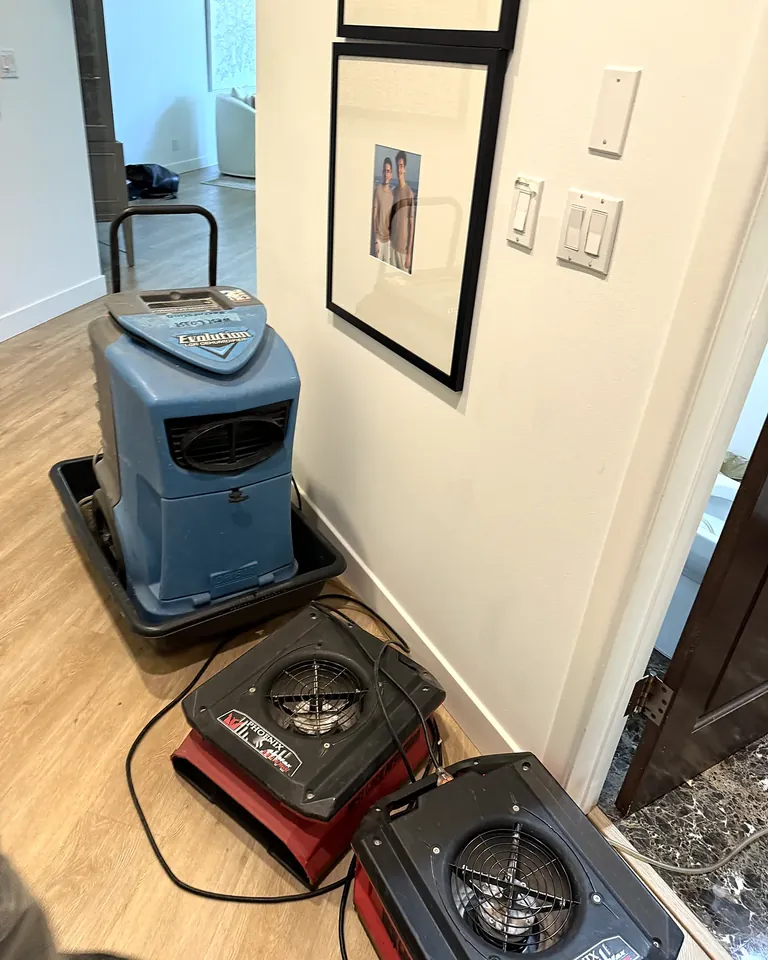
If water keeps entering, interior drying will not solve the loss. Have roof, plumbing, or drainage conditions addressed as appropriate. Sewage requires a distinct containment and cleaning plan; do not run fans across a backup before it is controlled.
For an insurance file, keep the date of discovery, source-repair information, safe photographs, and a list of affected contents. Do not make coverage decisions based on a contractor's description; the carrier applies the policy. Ask what documentation is useful before discarding items, while keeping safety and contaminated materials first.
If a tenant must temporarily stop using a restroom or storage room, ask management how the disruption will be communicated and where clean access remains. Keep this operational plan separate from the technical drying decision. A room should return to normal use only after the source, cleanup, and material condition have been addressed.
Long Beach questions
Can I use a wet vacuum in my Long Beach storefront?
Only if the area is safe and water is known to be suitable for that equipment. Stay away from electrical hazards and uncertain contamination.
Does extraction remove water behind plaster?
No. Hidden spaces and layered finishes may need separate inspection and drying or selective removal.
Should tenants call the building manager?
Yes, especially if shared plumbing, a ceiling above, or a common area may be involved.
What if water entered from a floor drain?
Treat the source as uncertain, keep people away, and determine whether sewage cleanup rather than routine flood cleanup is needed.
Need help with property damage?
Tell us what happened in Long Beach and whether the water source is still active. For emergencies, call rather than waiting on email.
(800) 880-1425