Prevent wastewater from crossing shared areas
An apartment backup can pass a bathroom threshold into a hall or reach the ceiling below. In a multi-tenant building, tell the property manager and keep residents away from affected corridors. Do not carry contaminated items through clean common areas without a containment plan.
Avoid bare-skin contact and mixing household cleaners. A plumber or drainage professional may need to clear or repair the line. Provide the restoration team with details about which fixture backed up and whether the problem recurred.
Stop using connected fixtures until the drain is understood; running a washer or flushing an upper toilet can add wastewater to an already affected unit. If more than one apartment reports a backup, share that information with the building manager rather than treating each overflow as independent.
Keep pets and children away from the area, and do not use a household vacuum or mop that will later return to clean rooms. If the corridor is affected, warn management before other residents pass through. Protecting clean circulation paths is especially important in buildings where exits and shared stairs are close to the loss.
Porous materials need a careful decision
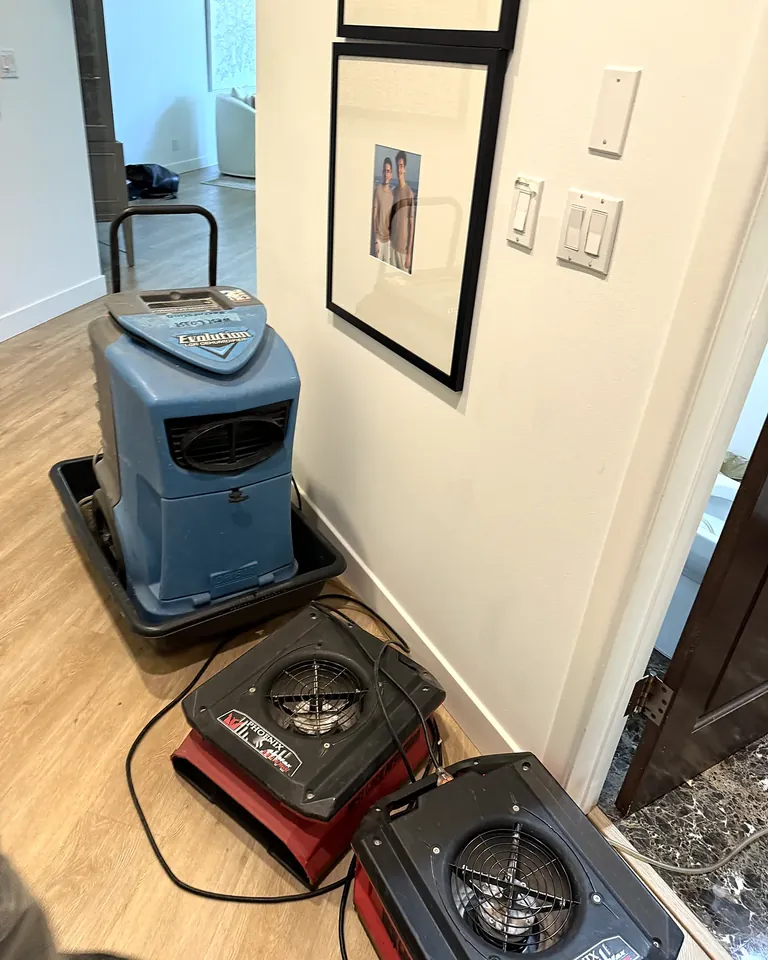
Carpet, padding, drywall, and cabinet bases may retain wastewater beyond the visible puddle. Depending on exposure, cleanup may involve isolation, extraction, removal of unsalvageable materials, cleaning, and drying. Air movers should not be used in a way that spreads contamination into neighboring units.
In an older building, access behind plaster or beneath flooring may be necessary to determine the boundary. Coordinate with the manager before disturbing common walls or shared plumbing chases.
Vinyl or tile on the surface does not guarantee that seams and edges stayed uncontaminated; porous underlayment and wall bases can be affected beneath an apparently washable finish. Ask how the scope addresses door thresholds and cabinet toe-kicks. Separate tenant belongings from building materials so each can be evaluated appropriately.
Plan how bagged debris will leave the unit without contacting elevator buttons, railings, or clean carpeting. A protected path and designated staging location reduce transfer to common areas. Building management can coordinate access, but the affected boundary still needs to be assessed inside the unit.
Document the event and verify the repair
Keep safe photographs, note the timing, and retain drain-repair records. Insurance coverage depends on policy terms. Before the room returns to use, confirm the backup source is corrected and that exposed building materials received appropriate cleanup and drying.
Before reopening a restroom to tenants or customers, confirm that plumbing service has addressed the cause and that cleanup of affected finishes is complete. Do not judge readiness by odor or a dry top surface alone. Keep the scope and service records with the building's maintenance file in case another floor reports a related issue.
If the incident involves a rental, document which belongings belong to the tenant and which fixtures or finishes belong to the owner. Notify the insurer promptly according to its instructions, but do not delay urgent containment to complete paperwork. Coverage and responsibility depend on the policy and building agreements.
Long Beach questions
Can sewage from my Long Beach apartment affect a neighbor?
It can move through shared plumbing, floor openings, or ceilings. Notify building management and keep neighboring areas in the assessment.
Can a household fan dry a bathroom after a backup?
No. First control and clean contamination; premature airflow can spread it.
Is old flooring safe after wastewater contact?
That depends on the material and exposure. Porous layers may require removal; assessment determines the scope.
Does a restoration company clear the sewer line?
Drain diagnosis and repair are separate from cleaning the affected building materials; both may be needed.
Need help with property damage?
Tell us what happened in Long Beach and whether the water source is still active. For emergencies, call rather than waiting on email.
(800) 880-1425