
Check garage thresholds and adjacent rooms
Water may enter beneath a garage door or follow a plumbing leak toward a house. In Westmont or Fountain Valley Estates, stored items can hide wet flooring and delay discovery. Do not step into water around electrical equipment or move heavy shelving without a safe plan.
Rain runoff, a supply leak, and a drain backup are different sources. Explain what you observed and whether the water is continuing to enter.
Remove water without overlooking materials
Extraction removes accessible standing water; it does not determine whether wallboard, flooring, or stored contents remain damp. An assessment can guide cleaning, selective removal, and structural drying. Outdoor water may carry contaminants, so do not assume a clear appearance makes it clean.
If the source is still active, arrange plumbing or exterior repair before expecting the interior to dry. Protect unaffected rooms from foot traffic and wet contents.
Plan for household and HOA access
For a shared driveway, attached unit, or managed community, notify the responsible party if water may cross property lines or shared construction. Keep a safe route around the affected area and document the loss when safe.
Before returning boxes or replacing trim, ask what moisture checks have been completed. Maintain receipts and photographs for an insurer, which determines coverage based on policy terms.
Separate runoff from an interior release
Water at a Fountain Valley garage threshold can come from outside, while a pipe or heater can release water from within the structure. The source affects whether debris or contamination controls are needed. Tell the responder what was observed and whether water was still entering when discovered; avoid wading near electrical equipment or moving heavy shelving.
Once the area is safe, protect a route into the house and check both sides of the threshold, lower drywall, stored boxes, and any floor covering. Extraction clears accessible water, but hidden moisture can remain at wall edges or beneath flooring. Do not use ordinary fans until the source and water condition are understood.
If the garage is part of a managed community, ask whether shared drainage or a common driveway needs inspection. Qualified plumbing or exterior repair may be needed to stop the release. Keep the interior drying plan separate from any drainage correction, then confirm affected materials have been checked before stored items are returned.
Keep contents and floors accessible for review
Do not stack boxes against the garage wall during inspection; leave access to check the baseboard and floor edge. Photograph items when safe before deciding what to retain.
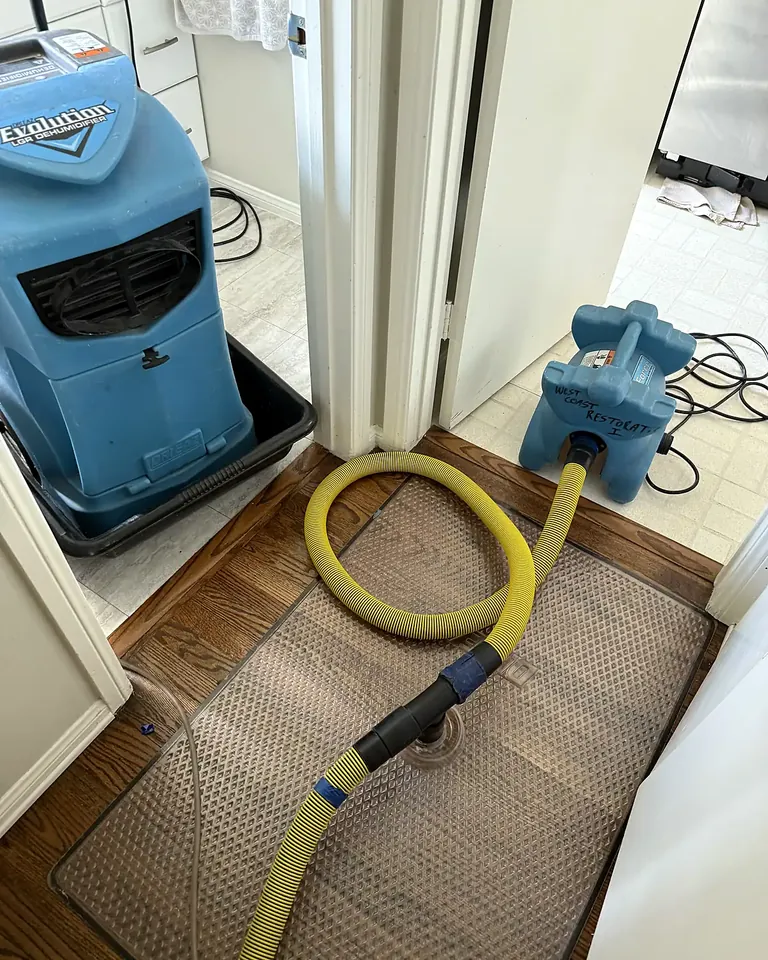
After extraction, ask how progress will be checked below the visible surface. A wet-dry vacuum is not a substitute for assessing wall and floor assemblies.
Fountain Valley questions
Is rainwater at a Fountain Valley garage door harmless?
Not necessarily. It can reach electrical items or carry outdoor debris; assess the source and keep clear of hazards.
Will a wet-dry vacuum dry my wall?
It may remove reachable liquid but does not dry concealed wall material or insulation. In Fountain Valley, check both the garage face and the adjoining room before returning stored goods; wall bases can hold moisture after a floor looks clear.
Should I move a waterlogged storage cabinet?
Avoid moving heavy or electrically hazardous items until access and contamination risks are considered.
Does an HOA need to know about garage flooding?
Notify management if common areas, shared drainage, or another unit may be involved. Ask whether a shared drive or drain should be checked, and confirm where wet items may be staged without blocking access. The HOA can coordinate common-area access; it does not replace assessment of the materials inside your unit.
Need help with property damage?
Tell us what happened in Fountain Valley and whether the water source is still active. For emergencies, call rather than waiting on email.
(800) 880-1425