
Where the water entered changes the plan
Not every flooded room has the same water source. A broken appliance hose in a Mesa Verde laundry area differs from runoff entering a low garage during heavy rain. Exterior water can pick up soil, debris, and other contaminants; do not assume it is clean simply because it looks clear. Tell the responder if water came through a door, a roof, a drain, or plumbing.
In a ground-floor College Park property, water may collect against stored belongings while moisture spreads into drywall or flooring. Shops and offices around South Coast Metro may have equipment or tenant spaces to protect. Photograph the conditions from a safe position, but do not walk through standing water near outlets, panels, or damaged structures.
Extraction is a starting step
Removing pooled water reduces ongoing exposure, but it does not resolve moisture trapped in baseboards, wall cavities, or under flooring. After extraction, the materials need evaluation for cleaning, drying, or removal. A wet rug on top of a dry tile floor is a different problem from a saturated wall or concealed subfloor.
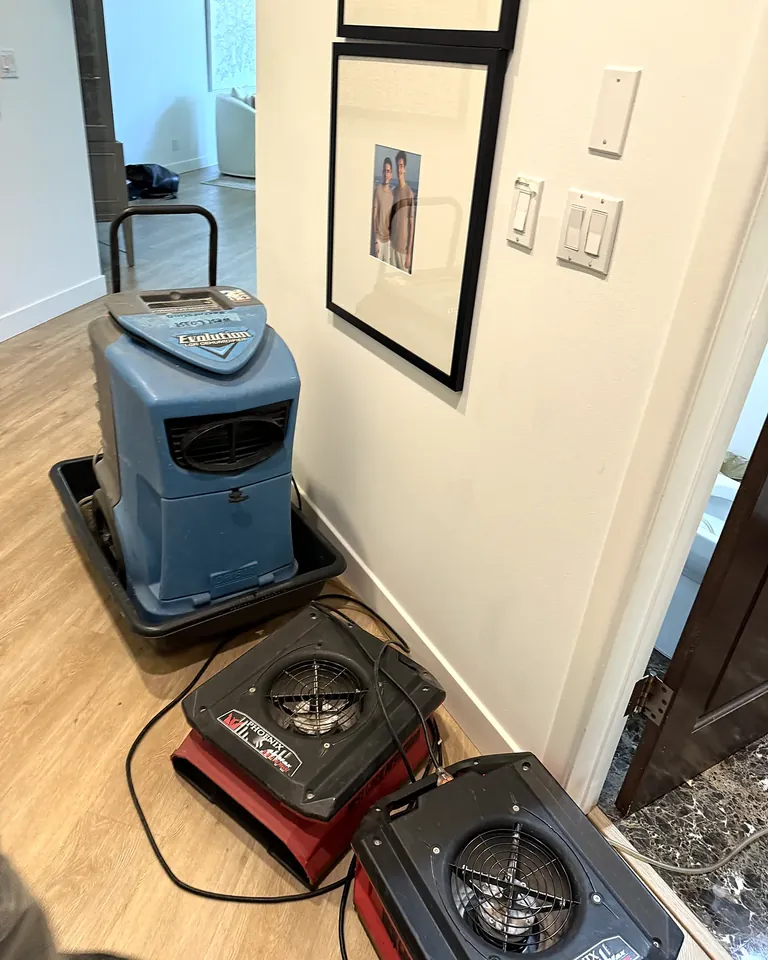
Drying equipment selection depends on the affected area and the materials, not just the number of visible inches of water. Airflow and dehumidification may support drying after the source is stopped and safety conditions are addressed. Repeated moisture checks help show whether the approach is working or a closed assembly needs attention.
Storm entry and building coordination
If rainwater continues to enter through a roof or opening, the exterior problem must be stabilized before interior drying can succeed. Do not climb onto a damaged roof or move debris around overhead electrical lines. Where a unit shares a wall or ceiling with a neighbor, tell the HOA or property manager so access and potential migration can be addressed.
For a business, keep a list of affected inventory and note which areas remain safe for staff. The same recordkeeping helps residential owners: capture dates, visible water levels, and source-repair information. A carrier may request supporting documentation, but payment depends on the policy and cause of loss.
Separate items that are merely damp from those that contacted outdoor water, and ask before moving heavy shelving or electrical equipment. If a garage drain is overwhelmed, the water may return until the drainage issue is addressed. If the source was an interior pipe instead, a plumber can help prevent a second release. The origin of the water shapes cleaning decisions and is worth clarifying before items are put back into use.
Know when to avoid DIY cleanup
Do not run household fans over water of uncertain origin, particularly after a drain backup or outdoor surge. If you see sewage, leave the affected space and read our sewage cleanup guidance. Flood-Pro can help evaluate cleanup needs in Costa Mesa and nearby Huntington Beach and Irvine; call to describe the conditions before choosing equipment.
Costa Mesa questions
Is water in my Costa Mesa garage safe to wade through?
Do not enter if electrical equipment may be wet, the source is unknown, or the structure is unsafe. Call for guidance.
Is emergency water removal the same as drying?
No. Extraction removes accessible liquid water; drying addresses moisture remaining in building materials.
Should I keep stormwater-damaged boxes?
Keep a photo and inventory first. Porous items exposed to contaminated water may not be safe to retain.
What if rain keeps entering?
Address the entry point safely with appropriate repair help. Interior drying will not hold if the water source continues.
Need help with property damage?
Tell us what happened in Costa Mesa and whether the water source is still active. For emergencies, call rather than waiting on email.
(800) 880-1425