Treat a backup as a contamination event
Wastewater can spread beyond the obvious puddle into carpet, wall bases, cabinets, and neighboring rooms. In a multi-unit Eastside Costa Mesa building, a shared drain issue may affect more than one apartment. Tell the property manager or HOA promptly and avoid carrying wet belongings through clean common areas without a plan for containment.
Even a small bathroom overflow may require more than surface wiping if porous materials were exposed. Keep children and pets out, do not touch the water with bare skin, and avoid mixing cleaning chemicals. A plumber or other qualified professional may need to stop the backup before restoration can begin.
What cleanup may involve
The scope depends on where the wastewater traveled and what it contacted. Work may include isolating the affected space, extracting liquid, removing materials that cannot be reliably cleaned, cleaning and disinfecting remaining surfaces, and drying the structure. Contamination needs to be addressed before airflow is used in a way that could carry particles to unaffected rooms.
A restoration assessment should look beyond the bathroom threshold. Water can wick under baseboards or follow joints in a slab toward a hallway. In older College Park housing, the construction details behind a finish may not be visible at first; selective access may be needed to understand the actual extent of damage.
Protect residents and document the loss
If there are electrical hazards, extensive contamination, or a strong odor in an enclosed space, leave that area and call. People with health concerns should avoid exposure. Save photos from a safe location, note when the backup started, and record any plumbing repairs; do not delay urgent safety steps to create paperwork.
In a South Coast Metro workplace, limit access to affected restrooms or tenant areas until cleaning is evaluated. In a condo, tell the HOA about possible shared plumbing and adjacent units. Flood-Pro can document restoration conditions for an insurance conversation, but the insurer decides coverage under the applicable policy.
Keep a clear route around the affected space for occupants who need to leave or access other rooms. Avoid setting contaminated bags or cleaning tools on unaffected surfaces. Where a backup reaches cabinets or a wall shared with another unit, ask how the boundary of the cleanup will be checked. The drain repair and the restoration work solve different problems; both need attention before a room is placed back in service. Before replacing baseboards, ask how cleaned surfaces and hidden wall edges will be evaluated so contamination is not enclosed behind new finishes.
Why a rented fan is not enough
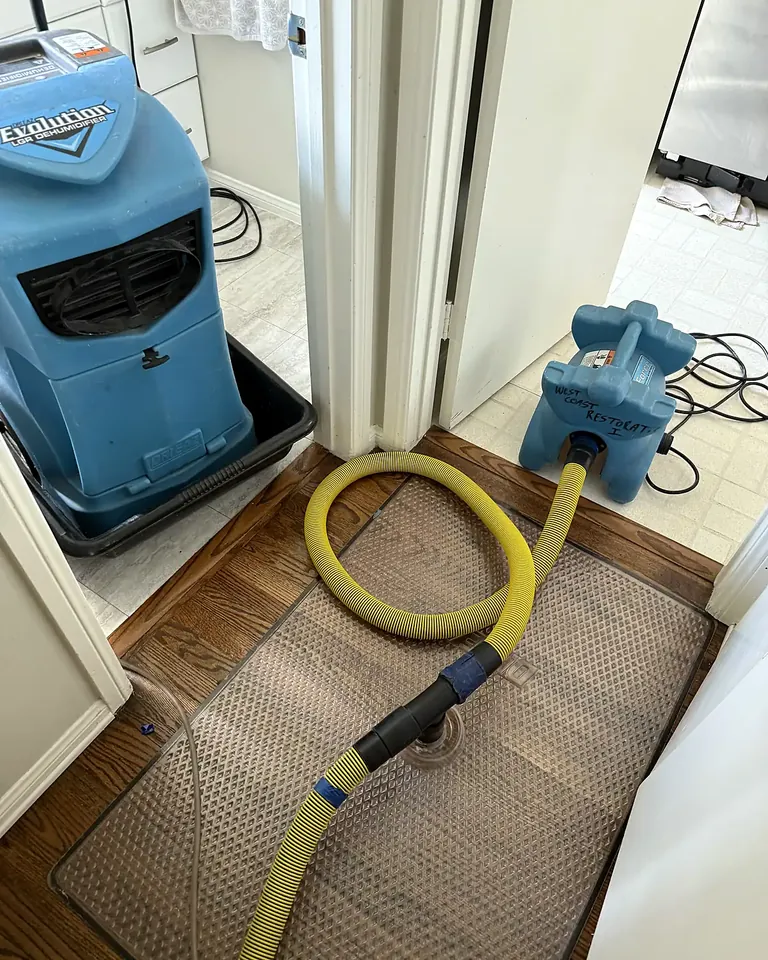
Air movers and dehumidifiers can support drying after contamination is properly handled; they do not disinfect sewage-soaked carpet or drywall. If you are uncertain whether a leak is from a clean supply line or a drain, describe the source when you call rather than selecting equipment yourself. See the broader sewage service page for additional safety guidance.
Costa Mesa questions
Can I use bleach after a toilet overflow in Costa Mesa?
A household product alone does not replace removal, cleaning, appropriate disinfection, and drying. Never mix cleaners.
Is a shared drain backup my HOA's responsibility?
Responsibility depends on the building documents and source. Notify the manager and arrange for the drain problem to be addressed.
Can sewage-exposed carpet stay?
Porous carpet and padding may require removal when exposed to sewage. A site assessment determines the appropriate scope.
When is it safe to use air movers?
Only after contamination has been assessed and controlled as part of a cleanup plan.
Need help with property damage?
Tell us what happened in Costa Mesa and whether the water source is still active. For emergencies, call rather than waiting on email.
(800) 880-1425