Water Damage Between Floors in Los Angeles: Checklist
A leak in a Los Angeles apartment, office, or other multi-level property can show up in a different room or floor from where it began. Water marks and damp flooring are clues, not proof of the source or the full extent of moisture. This checklist helps residents and building teams communicate what they see, protect occupants, and organize an assessment before deciding whether drying equipment is appropriate.
The short answer
When water appears on more than one level, protect people from electrical and ceiling hazards, notify the responsible building contact, and record what is affected on each floor. The visible wet area may not show the full path through ceilings, walls, or floor layers. Confirm the source, water condition, and affected materials before choosing drying equipment.
1. Keep people away from immediate hazards
Keep occupants out of areas where water is near outlets, light fixtures, electrical equipment, or a visibly damaged ceiling. Do not walk through standing water to reach a breaker, unplug a machine, or turn on a fan. OSHA warns against entering flooded areas or touching electrical equipment when the ground is wet.
If ceiling material is sagging, bulging, cracking, or falling, close off the area and notify the responsible building contact. Do not puncture the ceiling or climb a ladder to inspect a wet cavity. If there is an immediate threat to life or safety, follow the property's emergency plan and contact emergency services.
Do not ask residents or staff to enter an unsafe unit or service area to check where water is coming from. A qualified, authorized person should handle electrical, structural, plumbing, and building-system concerns.
- Keep children, visitors, and pets away from wet or unstable areas.
- Do not operate drying equipment until electrical conditions are safe.
- Do not delay emergency action to take photographs.
Guidance references: [1] OSHA: Flood Preparedness and Response — Response/Recovery
2. Notify the person responsible for the building
Contact the property manager, owner, facilities team, or other designated building representative. Share the address, floor and room where water is visible, when it was first noticed, whether it is still appearing, and any nearby units or shared spaces that may also be affected.
In a multi-unit property, coordinate access and updates through the responsible contact rather than asking neighbors to investigate one another's homes. Do not assume that the room with the ceiling stain contains the source, or assign responsibility before the cause has been investigated.
A clearly identified fixture shutoff may be used only when it is safely accessible and the person knows how to operate it. Leave unfamiliar valves, shared systems, and unsafe areas to authorized maintenance or plumbing professionals.
3. Record conditions on every affected level
When it is safe, take photos or video from a dry, stable location. Record the visible water, ceiling marks, walls, flooring, nearby contents, and the date and time. A simple floor-by-floor list can help the building team notice where conditions change and who has already been notified.
Keep messages, inspection notes, and receipts for authorized temporary work together. If an insurance claim may be involved, ask the relevant insurer what records it needs and whether an inspection should happen before permanent repairs. California's Department of Insurance recommends documenting property damage and keeping claim records, but coverage and responsibility depend on the specific policy and circumstances.
Documentation should not delay urgent source control or safety work. Do not enter a hazardous room or move heavy wet contents just to get a clearer picture.
- List each floor, room, and visible condition separately.
- Note when water appeared and whether the affected area changed.
- Keep copies of communications and reasonable temporary-work receipts.
Guidance references: [2] California Department of Insurance: Residential Property Claims Guide
4. Trace the water path without assuming the source
Water may travel beyond the first visible stain through a ceiling cavity, wall assembly, flooring layers, or adjoining spaces. A wet ceiling below a bathroom, for example, does not by itself prove which fixture or pipe is involved. The person investigating should consider the property layout, active plumbing or building systems, and what is visible on adjacent levels.
Ask which materials and rooms were checked, what remains inaccessible, and whether the source has been stopped or is still uncertain. EPA describes moisture meters as tools for investigating moisture problems and monitoring drying; a reading needs to be interpreted for the material and measurement method, not treated as one universal pass-or-fail number.
A dry-feeling surface does not establish that the space behind it or the floor assembly above or below it is dry. Avoid opening walls or ceilings yourself. Arrange appropriate access and assessment through the person authorized to manage the property.
Guidance references: [3] US EPA: Investigating and Evaluating Moisture Problems (Chapter 3)
5. Confirm water conditions before using drying equipment
Do not assume that water is clean based on the room or fixture where it appeared. If the source is uncertain or the water may have contacted sewage, outside runoff, chemicals, or other contaminants, keep people away and get appropriate guidance before disturbing materials or starting fans.
EPA's cleanup guidance for clean-water damage describes extraction, airflow, and dehumidification as distinct steps and advises confirming that water is clean or sanitary before using fans. Its guidance does not establish that every leak or multi-floor loss is suitable for do-it-yourself drying.
If assessment supports equipment use and electrical conditions are safe, ask who will set it up, monitor affected materials, and decide when drying is complete. A machine running for a certain number of days or a dry-looking surface is not, by itself, proof that concealed areas are ready for repair.
Guidance references: [4] US EPA: Table 1: Water Damage — Cleanup and Mold Prevention (clean water); [3] US EPA: Investigating and Evaluating Moisture Problems (Chapter 3)
6. Check whether Los Angeles equipment rental fits
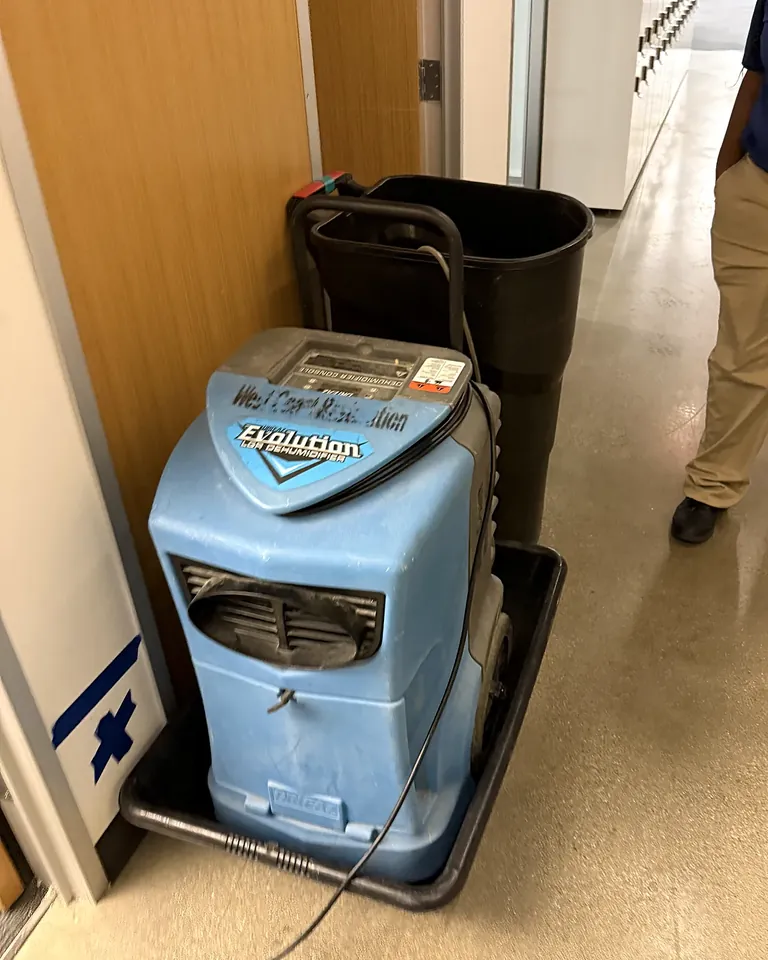
Flood-Pro's equipment rentals are for Los Angeles projects and cover dehumidifiers, air movers and carpet dryers, and air scrubbers. Rental equipment can support an assessed plan, but it does not locate a hidden leak, make an unsafe area safe, or establish that all floors and building materials are dry.
Call (800) 880-1425 with the property location, affected levels and materials, access details, and any assessment findings to ask about availability and suitability. Confirm the rental terms, setup and monitoring responsibilities, and return arrangements before booking.
Los Angeles equipment rental is separate from Flood-Pro's restoration service around Costa Mesa and nearby communities. For restoration needs, check the coverage directory and confirm the particular address and work before arranging service.
Guidance references: [4] US EPA: Table 1: Water Damage — Cleanup and Mold Prevention (clean water); [1] OSHA: Flood Preparedness and Response — Response/Recovery
Sources and references
- OSHA: Flood Preparedness and Response — Response/Recovery
- California Department of Insurance: Residential Property Claims Guide
- US EPA: Investigating and Evaluating Moisture Problems (Chapter 3)
- US EPA: Table 1: Water Damage — Cleanup and Mold Prevention (clean water)
References support the cited safety and drying guidance. They do not endorse Flood-Pro, verify business credentials, or establish property-specific conditions or service coverage. Access, scheduling, and installation questions are planning advice; confirm applicable requirements with the responsible professionals.
Common questions
What should I do first when water appears on multiple floors?
Keep people away from wet electrical equipment and unstable ceilings, notify the property's responsible contact, and report each affected floor and room. Do not enter unsafe areas or start fans before the water and electrical conditions are assessed.
Does a ceiling stain show where the leak started?
No. A stain shows a visible change but does not establish the source, timing, or full path of water. Have an authorized, qualified person investigate the building and nearby spaces.
Should I turn on fans right away?
Only after electrical conditions are safe and the water is known to be clean or sanitary. EPA's fan guidance applies to clean-water situations; uncertain or potentially contaminated water needs appropriate assessment first.
Can a moisture-meter reading prove that every floor is dry?
No single reading proves every material or concealed space is dry. Readings depend on the material and measurement method. Ask which locations were checked, what remains inaccessible, and how results were interpreted.
What should a building manager document after a multi-floor leak?
When the issue was noticed, which floors and rooms are affected, visible conditions, who was notified, and what authorized temporary work occurred. Follow the insurer's instructions for claim-specific records and inspections.
Does Flood-Pro provide full restoration service in Los Angeles?
Flood-Pro's Los Angeles offering is equipment rental. Its restoration service is around Costa Mesa and nearby communities. These are separate offerings; call (800) 880-1425 to confirm the address and requested work.