Water Damage After a Sprinkler Discharge in Los Angeles
A sprinkler discharge can leave water across an office, retail space, apartment common area, or other managed property. The first decisions are not about how many fans to place: confirm that people are safe, follow the building’s fire-protection procedures, and identify who is authorized to manage the system and the affected property. This guide covers those steps and the questions to ask before considering drying-equipment rental in Los Angeles.
The short answer
Treat an active fire or alarm as a life-safety event first. Once the scene is safe, have the authorized building team address the sprinkler system, keep people out of wet electrical or unstable areas, document the water’s path, and assess concealed materials before choosing a drying plan. Flood-Pro offers equipment rentals in Los Angeles only; availability and suitability must be confirmed.
1. Treat an active alarm or possible fire as an emergency
If there is smoke, fire, an active alarm, or an immediate threat to people, follow the building’s emergency and evacuation plan and call 911. Do not assume a discharge is only a plumbing problem until the responsible fire-safety team has confirmed the situation is safe.
Do not operate sprinkler valves, silence alarms, or attempt to restore a fire-protection system yourself. Leave system controls and any return-to-service decision to the fire department and the building’s authorized fire-protection personnel. NFPA explains that sprinklers are intended to help control fires and warns against turning off an activated system before the fire is confirmed extinguished.
Guidance references: [1] National Fire Protection Association: Fire Department Use of Sprinkler Systems
2. Keep occupants away from electrical and falling-material hazards
Water may reach lights, outlets, electrical rooms, powered equipment, or ceiling materials. Keep occupants and staff out of wet areas where electrical conditions are uncertain, and do not step into standing water to reach a breaker, unplug equipment, or move a machine. OSHA warns against entering flooded areas or touching electrical equipment when the ground is wet.
If a ceiling panel is sagging, bulging, or shedding material, close off the area and ask qualified building personnel to assess it. Do not climb a ladder, open a ceiling, or move heavy wet materials as an improvised first response. Use the building’s safety procedures and qualified help for electrical, structural, and fire-system concerns.
Guidance references: [2] OSHA: Flood Preparedness and Response — Response/Recovery
3. Notify the property team and record what is affected
Contact the property manager, owner, facilities lead, or other designated building representative. Share when the discharge began, which floors or rooms are affected, whether water is still appearing, and what the authorized fire-protection team has reported. In a multi-tenant building, coordinate access and updates through the responsible manager rather than asking occupants to investigate adjoining units.
When it is safe, take photos or video from dry, stable areas and keep a simple timeline of reports, inspections, and temporary actions. Note visible wet ceilings, walls, flooring, contents, and nearby spaces. If an insurance claim may be involved, ask the responsible owner or insurer what records and approvals are needed; this guide cannot determine coverage or who is responsible for a loss.
- Record the time, visible areas, and people or teams notified.
- Keep receipts and written approvals for authorized temporary work.
- Do not delay emergency response or enter a hazardous area to get better photos.
4. Assess the water path before starting fans
Water can move beyond the visible wet floor into ceiling cavities, wall assemblies, flooring layers, adjacent rooms, or spaces below. A dry-looking surface does not prove that concealed materials are dry. Ask what areas were inspected, which materials may have absorbed water, and whether moisture readings or further access are needed.
EPA’s cleanup table describes drying actions for specific materials and clean-water situations; it is not an approval for every sprinkler loss. Do not assume water is clean or sanitary based only on where it came from. If the source, exposure, or affected materials are uncertain, get an appropriate assessment before running fans or moving equipment that could spread water or contaminants.
Guidance references: [3] US EPA: Table 1: Water Damage — Cleanup and Mold Prevention (clean water); [4] US EPA: Investigating and Evaluating Moisture Problems (Chapter 3)
5. Decide whether Los Angeles equipment rental fits
Rental equipment may be considered only after the water source and fire-system response are addressed, electrical conditions are safe, and the affected materials have been assessed. Equipment can support a drying plan, but it cannot confirm that hidden areas are dry or replace professional assessment when water is widespread, concealed, contaminated, or affecting building systems.
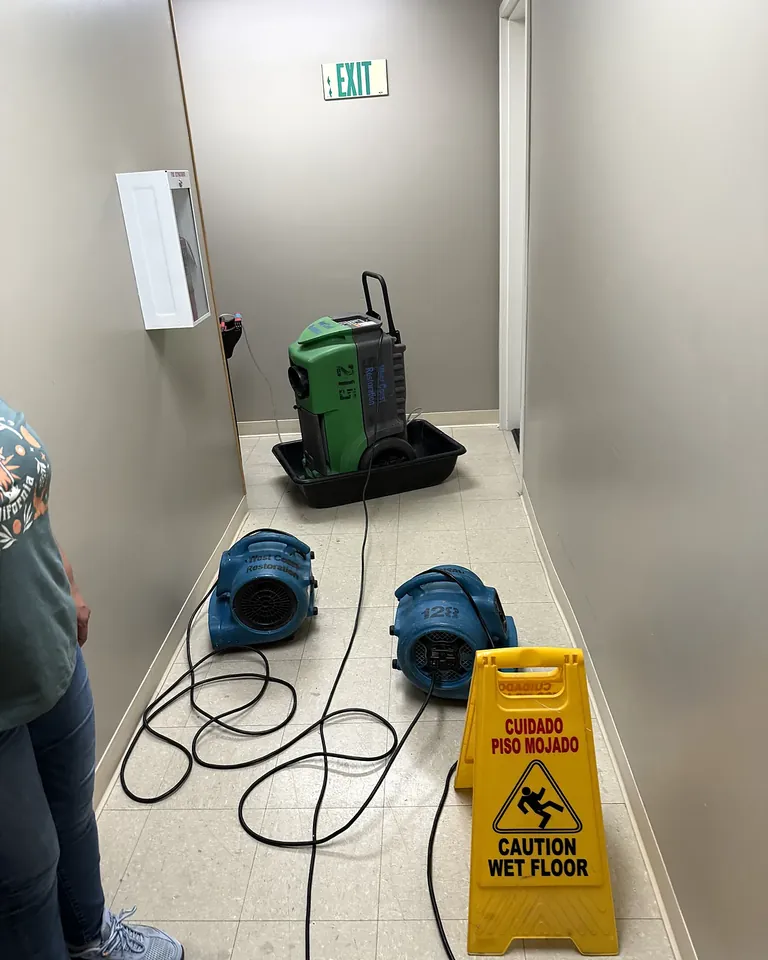
Flood-Pro’s equipment rentals are for Los Angeles projects only and include dehumidifiers, air movers and carpet dryers, and air scrubbers. Call (800) 880-1425 with the property location, affected materials, access details, and assessment findings to discuss current availability and suitability. Confirm electrical requirements, operating instructions, setup and monitoring responsibilities, rental terms, and pickup or return arrangements; do not assume those are included.
Los Angeles equipment rental is separate from Flood-Pro’s restoration service around Costa Mesa and nearby communities. A rental inquiry does not establish that restoration service is available at a Los Angeles address.
Guidance references: [3] US EPA: Table 1: Water Damage — Cleanup and Mold Prevention (clean water); [2] OSHA: Flood Preparedness and Response — Response/Recovery
Sources and references
- National Fire Protection Association: Fire Department Use of Sprinkler Systems
- OSHA: Flood Preparedness and Response — Response/Recovery
- US EPA: Table 1: Water Damage — Cleanup and Mold Prevention (clean water)
- US EPA: Investigating and Evaluating Moisture Problems (Chapter 3)
References support the cited safety and drying guidance. They do not endorse Flood-Pro, verify business credentials, or establish property-specific conditions or service coverage. Access, scheduling, and installation questions are planning advice; confirm applicable requirements with the responsible professionals.
Common questions
What should a building manager do first after a sprinkler discharges?
If there is smoke, fire, an active alarm, or an immediate threat, follow the building emergency plan and call 911. Once people are safe, contact the authorized fire-protection and property teams. Keep occupants out of hazardous wet areas.
Should I turn off the sprinkler system after it activates?
Do not operate sprinkler controls or restore the system yourself. Follow emergency procedures and leave system control and return-to-service decisions to the fire department and authorized fire-protection personnel.
Is water from a sprinkler discharge automatically safe to dry with fans?
No. Assess the water and what it contacted. EPA’s fan guidance applies to clean or sanitary water; if the source or exposure is uncertain, get appropriate guidance before using fans.
Can rental equipment dry a whole office after a sprinkler discharge?
Not necessarily. Equipment selection depends on the source, affected materials, concealed moisture, electrical safety, and size of the loss. Rental equipment does not replace assessment or prove that a building is dry.
What drying equipment can I ask about renting in Los Angeles?
Flood-Pro’s Los Angeles rental categories are dehumidifiers, air movers and carpet dryers, and air scrubbers. Call (800) 880-1425 to confirm availability and whether the equipment fits the assessed situation.
Does Flood-Pro provide full restoration service in Los Angeles?
Flood-Pro offers equipment rentals in Los Angeles. Its restoration service is around Costa Mesa and nearby communities; those are separate offerings, and property-specific coverage should be confirmed.