Flood-Cleanup Equipment Rental in Los Angeles: A Planning Guide
Searching for flood tool rental in Los Angeles can bring up very different machines. An air mover, a dehumidifier, and a water extractor solve different parts of a water-damage problem. Choosing only the most powerful fan—or the lowest daily price—does not establish that the affected materials can be dried safely. Use this checklist to prepare for a rental conversation before you collect equipment.
The short answer
Start with the water source and a safety assessment, not a machine count. For a suitable clean-water loss, extraction removes accessible water, air movers support evaporation, and dehumidifiers remove water vapor. Contaminated water, unsafe electricity, or concealed damage can make a rental-only approach unsuitable.
1. Identify the water source before discussing equipment
A stopped supply-line leak is not the same problem as sewage backup or outside floodwater entering a room. The water source, the affected materials, and how long they have been wet influence whether rental equipment is an appropriate option. If the source is unknown, do not assume the water is clean.
EPA’s drying table is specifically for clean-water damage. It says not to use fans before determining that the water is clean or sanitary, and recommends experienced professional advice for contaminated-water situations. A rental booking should never replace that assessment.
- Describe where the water came from and whether the source has been stopped.
- Explain which rooms and materials are affected, including adjoining spaces.
- Mention odors, visible growth, sewage, or any uncertainty about contamination.
- Keep out of flooded areas with electrical hazards; obtain qualified help before equipment is connected.
Guidance references: [1] US EPA: Table 1: Water Damage — Cleanup and Mold Prevention (clean water); [2] OSHA: Flood Preparedness and Response — Response/Recovery
2. Match each machine to its actual job
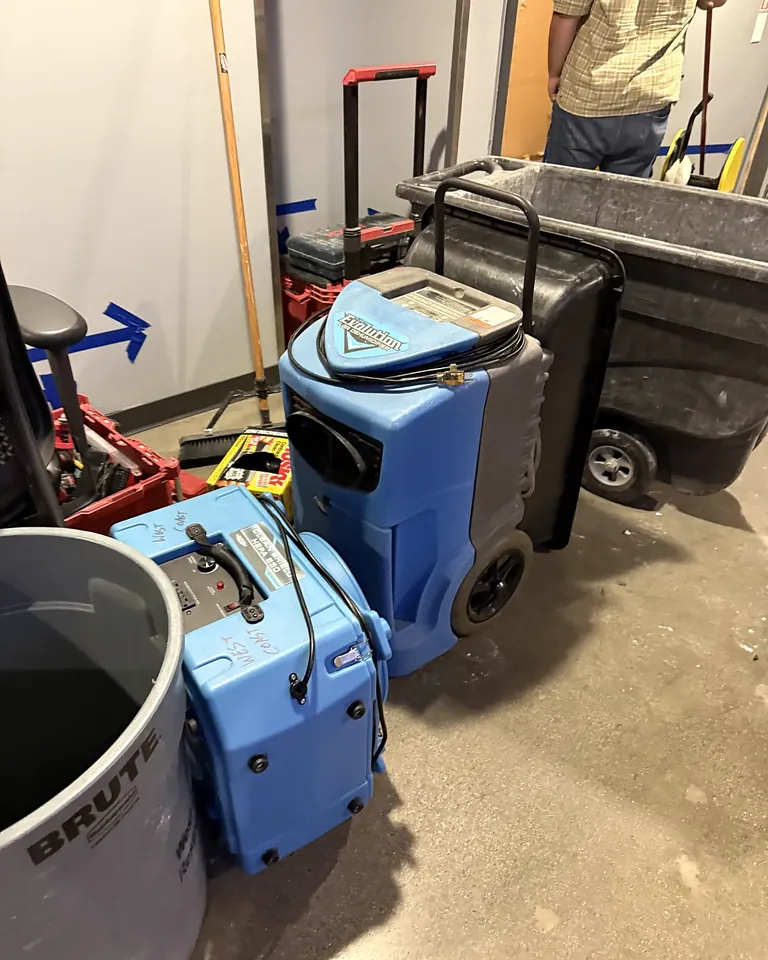
Water extraction equipment removes accessible liquid water. Air movers move air across exposed surfaces to support evaporation. Dehumidifiers reduce moisture in the surrounding air as materials release water vapor. One function does not substitute for all the others: blowing air across a wet surface does not establish that the subfloor or wall assembly is dry.
EPA’s clean-water guidance lists extraction, dehumidifiers, and fans for carpet and backing, and specifically notes that the subfloor also needs attention. Moisture sensors can help investigate the affected area, but readings must be interpreted for the particular material rather than treated as a universal pass/fail number.
- Ask what the proposed equipment is intended to dry and why it fits those materials.
- Discuss moisture checks and the limits of surface-only inspection.
- Ask whether specialized floor or cavity drying requires professional setup.
Guidance references: [1] US EPA: Table 1: Water Damage — Cleanup and Mold Prevention (clean water); [3] US EPA: Investigating and Evaluating Moisture Problems (Chapter 3)
3. Prepare for a Los Angeles property, not an imaginary empty room
For an apartment, condo, storefront, or other managed building, discuss access with the person responsible for the property. Before booking, tell the rental team about stairs, elevator access, parking restrictions, loading arrangements, and where equipment can be operated without obstructing an exit. These are planning questions, not promises that delivery or setup is included.
Ask for the specific machines’ electrical requirements, drainage arrangements, operating instructions, and safe placement guidance. Do not connect equipment through standing water, use damaged cords, or guess whether a circuit can handle the load. A qualified electrical professional should address unsafe or uncertain electrical conditions.
Guidance references: [2] OSHA: Flood Preparedness and Response — Response/Recovery
4. Ask about the whole rental arrangement
Flood-Pro’s equipment rental offering is for Los Angeles projects. Call (800) 880-1425 with the property location and situation to confirm availability. Photos on this website show field equipment, not a live stock list; a pictured machine is not a reservation.
Before agreeing to a rental, request the equipment list, rental period, charges, deposit terms if applicable, pickup or delivery arrangements, and return requirements. Ask who is responsible for installation, monitoring, and technical support. This checklist describes what to clarify with the business, not a fixed price or an included service package.
- Confirm exact equipment and any accessories needed for the proposed setup.
- Ask how extensions, cancellations, cleaning, and equipment problems are handled.
- Clarify who checks drying progress and decides when the machines can be returned.
5. Use measurements—not a fixed number of rental days—to reassess
Drying time depends on the water source, materials, access to wet assemblies, and conditions during the work. A dry-looking carpet surface or an empty dehumidifier tank does not prove that the building is dry. EPA identifies moisture meters as tools for investigating wet materials and monitoring drying.
If the wet area expands, odors develop, materials remain wet, or the source turns out to be contaminated, stop treating the job as a simple equipment decision and seek qualified assessment. EPA’s early-action guidance is not a guarantee that every material can be saved or that a loss will be resolved within a particular number of hours.
Guidance references: [3] US EPA: Investigating and Evaluating Moisture Problems (Chapter 3); [1] US EPA: Table 1: Water Damage — Cleanup and Mold Prevention (clean water)
Sources and references
- US EPA: Table 1: Water Damage — Cleanup and Mold Prevention (clean water)
- OSHA: Flood Preparedness and Response — Response/Recovery
- US EPA: Investigating and Evaluating Moisture Problems (Chapter 3)
References support the cited safety and drying guidance. They do not endorse Flood-Pro, verify rental inventory, or establish service coverage. Building access and rental questions are planning advice; rental availability is company information, not an agency recommendation.
Common questions
Which flood-cleanup tools can I ask about renting in Los Angeles?
Flood-Pro lists air movers, dehumidifiers, extraction equipment, moisture sensors, and specialty drying systems on its rental page. Call (800) 880-1425 to confirm the equipment available for your situation; listings and photos do not guarantee stock.
Is a dehumidifier enough to deal with water damage?
Not necessarily. A dehumidifier removes water vapor from the air, but does not stop a leak, remove all standing water, or establish that concealed materials are dry. Appropriate assessment, extraction, and moisture monitoring may also be needed.
Can I use rental fans after a sewage backup?
Do not start fans where water is contaminated or its source is uncertain. EPA says to establish that water is clean or sanitary before using fans. Contaminated-water damage needs appropriately qualified professional assessment.
Does renting equipment include restoration work?
Do not assume that it does. Confirm setup, monitoring, support, and any other work separately. Flood-Pro’s Los Angeles equipment rentals are distinct from its restoration coverage around Costa Mesa and nearby communities.