Commercial Water Damage: First Steps to Protect People and Operations
Water in a workplace can affect staff safety, business continuity, inventory, and building systems at the same time. Assign clear responsibilities early, keep people out of unsafe areas, and coordinate source repair and mitigation with the property’s facility and safety procedures.
Secure the area and communicate clearly
Block access to wet floors, active leaks, electrical hazards, and areas with ceiling damage. Follow the site’s emergency and evacuation procedures; do not ask staff to enter standing water or move equipment near electrical systems. Tell occupants which routes, rooms, or facilities are temporarily unavailable and identify a single point of contact for updates.
- Protect occupants, visitors, and contractors first.
- Escalate suspected electrical, structural, or life-safety hazards to qualified responders.
- Record the affected zones and any access restrictions.
OSHA identifies electrical, chemical, biological, and other flood-response hazards; never enter flooded areas or touch electrical equipment while the ground is wet. [1] OSHA
Stop the source and preserve an accurate record
Use the building’s approved procedures to isolate the source, and arrange a qualified repair. Document the affected rooms, time discovered, observed source, and steps taken. Photograph conditions and impacted contents when safe, and keep receipts, vendor records, and communications together. Coordinate with the property owner and insurer about notifications, approvals, and access.
EPA recommends identifying and fixing the moisture source and assessing the size of the affected area before planning work. [2] US EPA
Plan mitigation around building operations
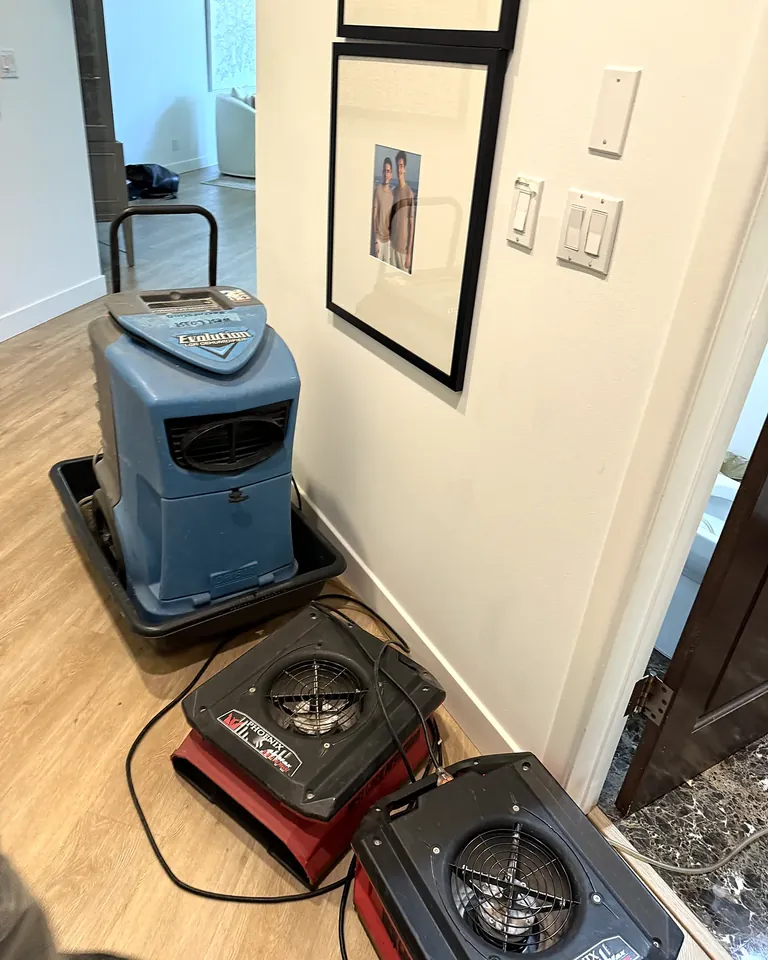
Commercial spaces may contain sensitive stock, shared corridors, tenant areas, or equipment that changes how work can be staged. Discuss safe access, containment, operating hours, noise, power needs, and protection of unaffected areas before work begins. Prompt commercial restoration can assess extraction and drying options, while flood cleanup addresses water removal. For a residential first-day checklist, see what to do after a supply-line leak.
- Identify a facility decision-maker and an after-hours contact.
- Separate affected and unaffected routes where practical.
- Track readings and work areas so reopening decisions use evidence.
EPA emphasizes occupant safety, communication, and revising the work plan when new damage is discovered; moisture meters can monitor drying. [2] US EPA
Sources and references
- OSHA: Flood Preparedness and Response — Response/Recovery
- US EPA: Investigating and Evaluating Moisture Problems (Chapter 3)
Sources checked . These sources support the specific guidance cited beside each section; they do not endorse Flood-Pro or verify its services, equipment, or credentials.
Project decisions depend on the water source, materials, contamination, and safe access. Do not start fans until water is known to be clean or sanitary and electrical conditions are safe; visible or suspected mold needs appropriate assessment before airflow. Rental availability and Los Angeles-only rental coverage are company information, not agency recommendations. Insurance coverage depends on your policy and insurer.
Common questions
Should employees clean up a commercial water loss?
Only trained personnel should work in areas confirmed safe and within their role. Keep occupants clear of electrical hazards, contamination, and unstable materials.
Can a business stay open during restoration?
It depends on the affected area, safety, contamination, building systems, and work plan. The site decision-maker should coordinate with qualified professionals and follow applicable safety procedures.
What should a facility manager document?
Record when and where water was discovered, actions taken, affected assets and areas, photographs, vendor communications, and relevant receipts or work records.