
Project notes · Cerritos · Published September 29, 2026
Tile-Floor Water Extraction: A Cerritos Project
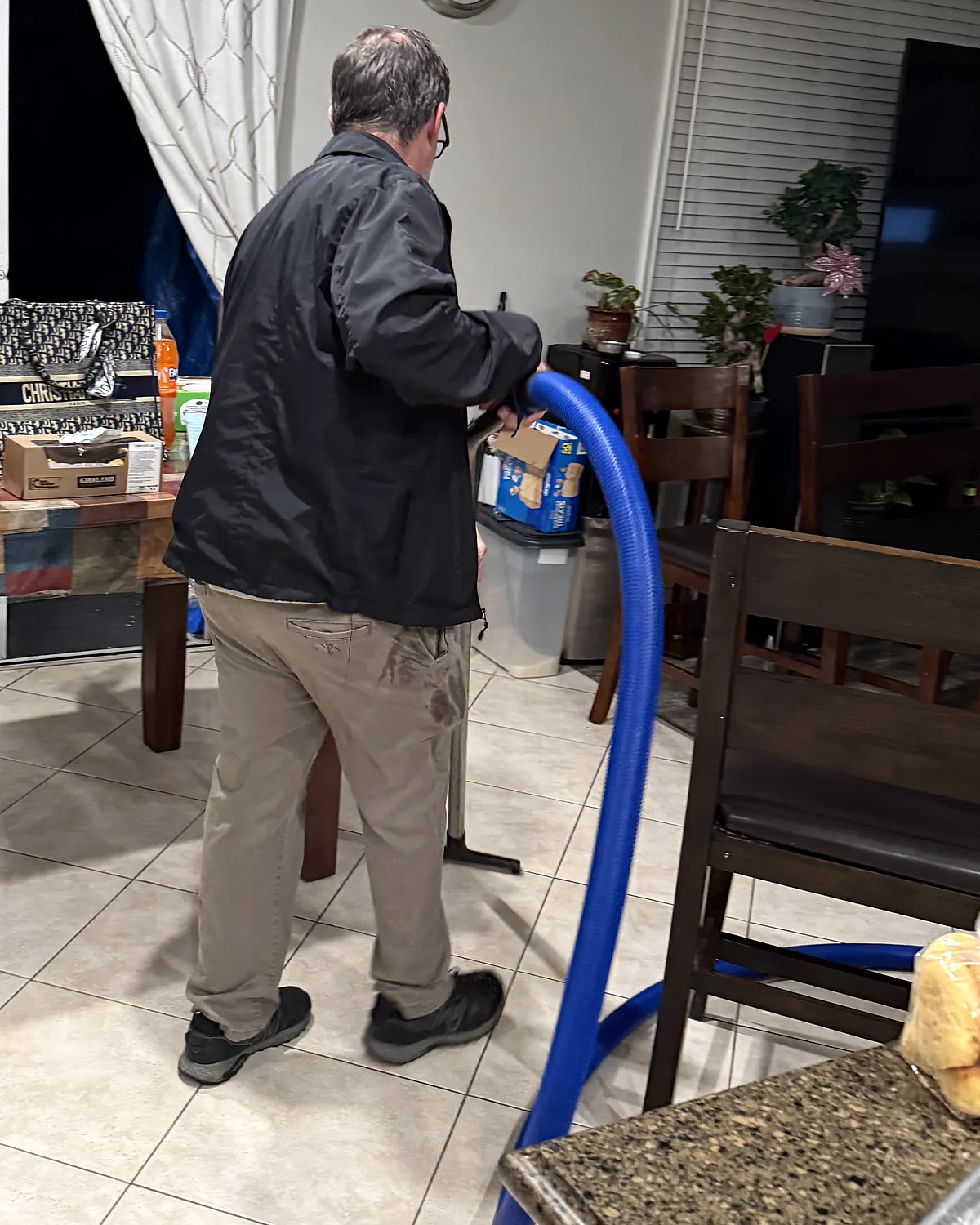
This photo, shared by the Flood-Pro team from a Cerritos project, shows a technician using an extraction hose on a tiled floor. It documents the work shown; it does not establish the cause of the water, the full scope, or the final outcome.
What this work illustrates
Removing accessible water is an important first step. The photo shows extraction on tile, but a photograph alone cannot tell whether moisture also reached grout, adjacent cabinets, walls, or the materials beneath the floor.
After the source is addressed, a restoration assessment may include moisture readings in nearby materials. The drying approach depends on those findings, the water source, and how long materials have been wet.
If you discover water in a kitchen or another tiled room, avoid electrical hazards, stop the source if it is safe to do so, and document the visible conditions before moving affected items.
Common questions
What does this project photo confirm?
The Flood-Pro team confirmed the photo’s location as Cerritos. It documents only the visible work, not the cause, full scope, duration, or final outcome.
Does this photo show that the property is fully dry?
No. A photograph cannot establish moisture levels inside building materials. Appropriate inspection and measurements are needed to assess drying.