
Inspect likely entry paths safely
In established Garden Grove homes, roof water can follow framing and show up away from the opening. Wind-driven rain at a window may soak trim and wallboard below, while water at a garage threshold can reach stored belongings. Record where water appeared but do not climb onto a wet roof.
If a ceiling is sagging or water is near wiring, keep people away. A qualified roofer or repair professional may need to secure the exterior before interior work can proceed.
Check adjoining materials
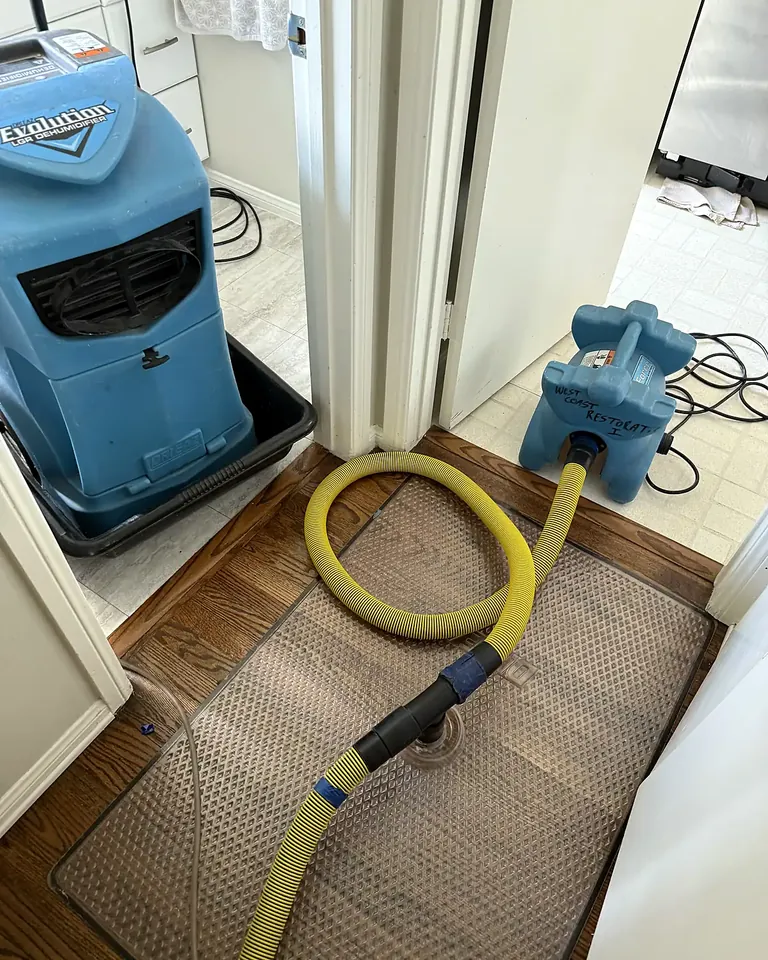
After weather entry stops, assess insulation, wall bases, flooring, and contents rather than drying only the visible surface. Extraction, selective removal, and monitored drying may be appropriate depending on the materials and exposure.
If water came through a drain or plumbing fixture during the storm, identify that source separately. A different water category can change cleaning and safety decisions.
Coordinate repairs and claim records
Tell an HOA or landlord if common building elements or neighboring units were affected. Keep a timeline of rain entry, temporary repairs, and restoration; take photos only from a safe location. The insurer determines coverage under the policy.
Before repainting or closing a ceiling, ask how drying progress will be verified. Securing the exterior opening is essential if weather exposure could continue.
Trace runoff and protect the garage transition
In an established Garden Grove neighborhood, stormwater at a garage threshold may reach boxes, a water heater, or the wall leading into the home. Note where the water first appeared and whether it followed a roof or driveway path. Do not enter if electrical equipment may be wet, and do not climb onto a roof to search for an opening.
Once weather entry is controlled, check the threshold, lower wall, stored belongings, and flooring in the adjoining room. Water can move beneath an interior door or along a slab edge. Extraction removes pooled water, while moisture checks help determine whether wallboard, underlayment, or insulation also needs drying or removal.
A qualified roofer or other exterior professional may need to repair the opening; the restoration plan handles indoor materials. Tell a property manager if a common roof, shared drainage route, or adjacent unit is involved. Photograph safely and keep the exterior repair record with mitigation notes for insurer discussion.
Keep items out of the drying path
Do not stack salvaged boxes against an affected wall while readings are being taken. Leave space for inspection and use a dry storage area only after considering what the contents contacted.
If water appears again after cleanup, report the timing and source rather than repeating surface drying. Ongoing entry must be resolved before interior materials can be considered complete.
Garden Grove questions
Can rain damage a Garden Grove garage even with the door shut?
Water may enter at a threshold or another opening. Identify the path safely and assess nearby contents and materials. Check the wall shared with the house and avoid returning stored boxes until the threshold and floor edges have been evaluated.
Should I tarp my own damaged roof?
Avoid climbing on a wet or damaged roof. Contact qualified help to secure the exterior. After entry stops, check for moisture at the ceiling edge and nearby wall, not only the visible stain; keep repair and drying records separate.
Can I dry a storm-wet wall with a household fan?
The source and material condition should be assessed first; a fan may not reach moisture inside the assembly.
Does restoration include roof replacement?
Interior restoration addresses resulting damage; roof repair or replacement may require a separate qualified contractor.
Need help with property damage?
Tell us what happened in Garden Grove and whether the water source is still active. For emergencies, call rather than waiting on email.
(800) 880-1425