A floor-drain backup is not ordinary flooding
Wastewater can spread from a laundry or garage drain into stored belongings, floor joints, and wall bases. In a slab home, liquid may migrate under trim before appearing in an adjoining room. Do not assume a small visible area marks the full exposure.
Avoid bare-skin contact, chemical mixing, and attempts to mask odor. Keep children and animals away. A plumber may need to clear a blockage or inspect the line; tell the property manager if shared plumbing could affect another Huntington Beach unit.
A backup at more than one fixture can indicate a problem beyond an individual toilet trap. Stop using water-consuming appliances until the drain situation is understood, since a washer discharge can add volume to the affected floor. Make a note of fixtures involved and when the first overflow occurred.
Keep the route to an exit clear and do not use a bathroom sink or shower to rinse contaminated tools. If occupants use a shared laundry room, notify the manager so the affected drain is not used by another household before it is assessed.
Contain before cleaning and drying
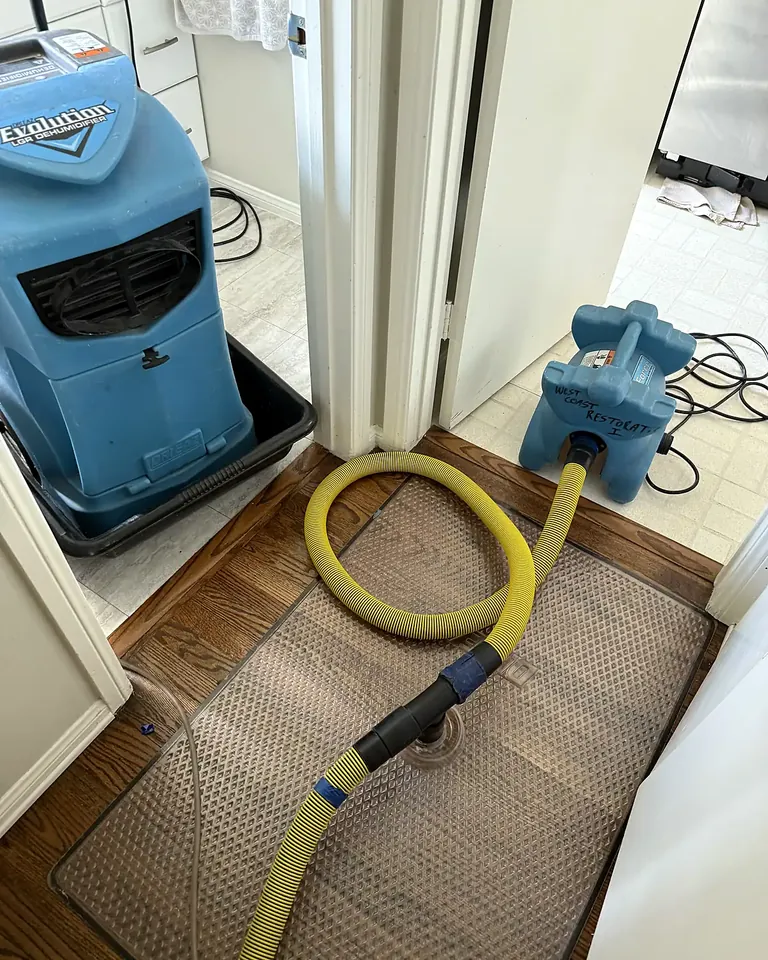
A responsible scope identifies the affected boundary and which porous materials cannot be reliably cleaned. Work may include isolation, extraction, removal of contaminated carpet or drywall, cleaning, and drying once contamination is controlled. Air movers used too early can spread material beyond the original room.
For a Downtown apartment or attached property, plan routes for workers and bagged materials so clean common areas remain separate. Document the backup and any drain repair for the insurer, which determines coverage.
Pay particular attention to carpet tack strips, cabinet kick plates, and the underside of vanity panels, where liquid can remain after the open floor looks clean. Ask how those concealed edges will be checked. Do not store removed items in a shared hallway or elevator lobby where other residents could contact them.
Hard flooring can still have porous underlayment or contaminated edges at a doorway. Make sure the assessment includes transition strips and the back of the door, not only the central tile. If any material is removed, ask how the clean boundary will be maintained between the affected room and occupied parts of the home.
Verify the source and affected assemblies
A backup that returns after surface cleanup suggests the drain problem may remain unresolved. Ask what materials were exposed beneath baseboards or cabinets and how those areas will be checked. Do not close repaired finishes until the source is fixed and drying needs are addressed.
If the plumber's work requires a later test, coordinate that step before rebuilding so a fresh discharge does not affect completed work. Keep a record of the drain service and the restoration assessment. The two scopes answer separate questions: whether the plumbing works and whether affected surfaces are suitable to return to use.
Before bringing rugs, laundry baskets, or stored supplies back, confirm the cleanup and dry-out are complete and the drain behaves normally. Do not use odor alone as the return-to-service test. If another backup occurs, stop use and report it rather than repeating a household surface cleanup.
Huntington Beach questions
Can I use a household disinfectant on sewage in my garage?
Surface disinfectant does not resolve wastewater in porous or concealed materials. Keep the area isolated and arrange assessment.
Should I run a fan after a Huntington Beach drain backup?
No. Airflow can spread contamination before it is contained and cleaned.
Could sewage under a baseboard reach another room?
It can travel along floor edges or beneath finishes. An assessment should check beyond the visible puddle.
Who handles the blocked sewer line?
A plumber or appropriate drainage professional addresses the line; restoration handles contamination and building materials.
Need help with property damage?
Tell us what happened in Huntington Beach and whether the water source is still active. For emergencies, call rather than waiting on email.
(800) 880-1425